Incorporating natural stone into residential and commercial outdoor spaces dramatically enhances visual appeal, structural durability, and functional utility. Professional landscape rock suppliers offer a vast selection of aggregate materials, river rocks, flagstones, and structural boulders that transform ordinary yards into modern, serene retreats. Understanding current stone design trends, material selection criteria, cost-effective application strategies, and routine maintenance practices empowers property owners to create low-maintenance, environmentally sustainable outdoor environments.
Key Decorative Rock Styles and Design Applications
Natural stone pathways utilize slate, flagstone, or granite pavers to create structured or meandering walkways across a lawn or garden bed. Combining flat stone pavers with pea gravel or river rock infill provides stable foot traffic zones while preserving natural ground drainage.
Dry creek beds are engineered by arranging smooth river rocks, riprap, and variable-sized boulders to simulate natural, dried watercourses. These installations serve a dual purpose: providing an attractive, rustic focal point and channeling heavy stormwater runoff safely away from building foundations and paved driveways.
Japanese rock gardens, commonly known as Zen gardens, incorporate fine-grained decomposed granite, crushed gravel, and carefully positioned accent boulders. Zen gardens emphasize minimalism, geometric raking patterns, and quiet reflection, requiring virtually no irrigation and minimal plant care.
Rock mulches and decorative groundcovers offer an enduring alternative to traditional organic wood bark mulch. By utilizing lava rock, crushed marble, or granite chips around plantings, homeowners establish permanent ground coverage that does not decompose, wash away during heavy storms, or attract wood-boring pests like termites.
Retaining walls and terraced ledges utilize stacked fieldstone, cut limestone, or heavy granite boulders to manage severe slope changes on sloped properties. These heavy stone installations stabilize shifting soils, prevent erosion, and create terraced garden beds that add multi-dimensional interest to outdoor living spaces.
Popular Decorative Rock Types and Characteristics
River rock features smooth, rounded surfaces showcasing mixed natural earth tones, such as tan, gray, brown, and cream. It is commonly deployed in dry creek beds, garden borders, and surrounding outdoor water features, offering high durability and excellent resistance to water erosion.
Flagstone and slate present flat, layered sheets available in rich charcoal gray, deep red, rust, or tan tones. These stones are ideal for patio flooring, stepping stone pathways, and capstones on low walls, providing a smooth surface that delivers moderate to high durability when sealed in freeze-thaw climates.
Decomposed granite consists of fine, gritty aggregate available in warm tan, gold, or sandy brown hues. Highly effective for walkways, driveway borders, and patio bases, this material compacts tightly while remaining permeable to rainfall, making it a stable, long-lasting surface choice.
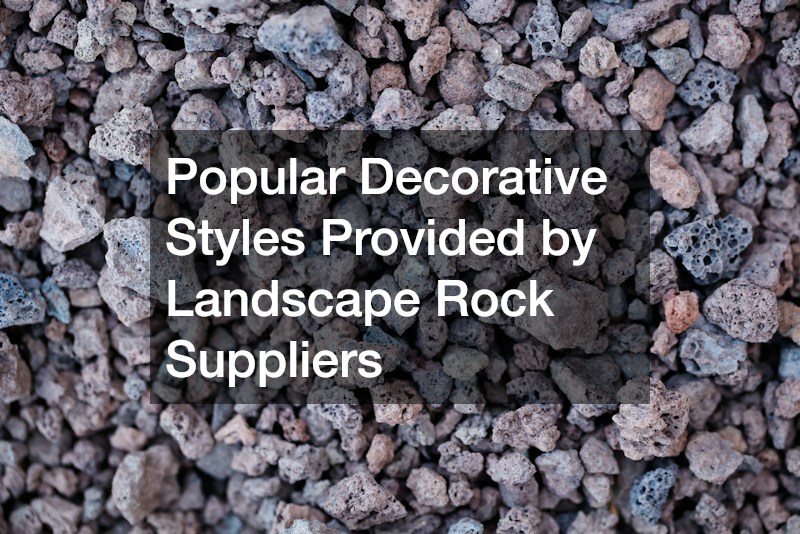
Crushed lava rock is porous, lightweight, and typically features dark red or deep black coloring. Frequently used around tree rings, flower bed mulches, and accent borders, lava rock provides exceptional heat resistance and permanent color retention that will not fade under continuous exposure to intense sunlight.
Granite boulders are large, rugged, irregularly shaped natural stones that command attention in any landscape design. Functioning as focal accents, retaining wall anchors, or property boundary markers, granite boulders offer unmatched physical durability, remaining completely impervious to severe weather, deep frost, and heavy mechanical impacts.
Essential Selection Factors for Landscape Rock
Material selection must account for regional climate conditions and environmental stressors. Highly porous stones like unsealed limestone or soft sandstone can absorb moisture and fracture during sudden freeze-thaw cycles. Conversely, harder, non-porous stones like granite, basalt, and quartzite naturally resist cracking, spalling, and surface fading caused by heavy downpours or harsh ultraviolet radiation.
Achieving the proper scale prevents rock features from overwhelming surrounding plants or architectural elements. Large boulders should be buried one-third into the ground to anchor them visually and structurally. Medium aggregate measuring one to three inches works best for plant borders and dry creek beds, while fine gravel measuring one-quarter inch to one-half inch provides comfortable footing for pedestrian pathways.
Landscape rocks should complement the property’s existing architectural materials and color schemes. Cool-toned gray slate, white marble chips, and dark basalt suit modern, contemporary building designs. Warm-toned sandstone, tan river rock, and decomposed granite blend naturally with rustic, Mediterranean, or traditional architectural styles.
Partnering with a reliable landscape rock supplier gives property owners access to durable, eco-friendly materials that elevate outdoor aesthetics while reducing maintenance overhead. Whether building a functional flagstone pathway, an erosion-controlling dry creek bed, or a water-conserving rock garden, choosing the right stone type, scale, and texture ensures a timeless, sustainable landscape that thrives in any climate.
Related Posts
Tips for Waterproofing Your Home
Waterproofing your home is essential for maintaining its integrity and comfort during harsh weather conditions.…

3 Reasons to Install a Water Softener
1. Improved Appliance Efficiency One of the primary reasons to install a water softener in…

How a Painting Company in Seattle Can Enhance Your Home
Discover how the expertise of a painting company in Seattle can transform your home by…