A home is defined by more than its floor plan. Its boundaries mark where private space begins and set the first line of defense against wind, intruders, and wildlife. Its systems deliver water, power, and conditioned air to every room while carrying waste and heat away. Its spaces, both indoors and out, shape how a household gathers, works, and rests. Each of these layers has its own vulnerabilities, from leaning posts and overgrown canopies to aging wiring, hidden leaks, and outdoor surfaces that shift with the soil.
Strengthening a home means addressing all three layers with the same care. Solid perimeter structures and well-managed landscaping protect the lot and the structure from weather and intrusion. Safe electrical service, reliable plumbing, a tight shell, and properly sized heating and cooling equipment keep the interior comfortable and secure. Thoughtfully built outdoor living areas extend the usable space of the property and add lasting value. When boundaries, systems, and spaces are planned and maintained together, they reinforce one another, creating a home that is safer, more comfortable, and more enjoyable year after year.
Setting Frost-Proof Posts and Hanging Weather-Resistant Panels
Perimeter structures endure constant stress from wind, soil movement, and moisture. In colder regions, water in the soil freezes and expands each winter, pushing shallow posts upward a little more every season until rails twist and gates no longer latch. Posts set in plain dirt or in concrete collars that trap water rot at grade, while panels made from untreated wood warp, split, and fade under years of sun and rain. Once the structure begins to lean, it no longer provides reliable privacy, security, or containment for pets and children.
An experienced fence contractor digs post holes below the local frost line, typically at least one-third of the post length, adding gravel at the bottom for drainage and setting posts in concrete crowned to shed water away from the base. Ground-contact rated pressure-treated lumber, galvanized steel, or aluminum posts are plumbed and braced while the concrete cures. Weather-resistant panels of cedar, vinyl, composite, or powder-coated metal are fastened with stainless steel or hot-dip galvanized hardware, and gates receive heavy-duty hinges and anti-sag kits for smooth, secure operation.
Removing Hazardous Specimens and Grinding Leftover Stumps
Mature landscaping adds beauty and shade, but declining specimens can quickly become serious liabilities. Internal decay, fungal growth at the base, cracked trunks, and dead limbs in the upper canopy all signal weakening wood. Specimens leaning toward the house, driveway, or power lines can fail suddenly during storms, while roots seeking moisture invade foundations and buried pipes. Old stumps left from earlier work create tripping hazards, interfere with mowing, and attract termites as they decay.
A reliable local tree removal service begins with an arborist’s assessment of decay, lean, and surrounding targets. Hazardous specimens are dismantled in controlled sections using rigging and lowering ropes, with cranes used for heavy pieces near structures. Stumps are ground eight to twelve inches below grade along with major surface roots, reducing regrowth and pest activity. Debris is chipped and hauled away, and the area is backfilled with topsoil so it can be seeded or replanted.
Sealing Rodent Entry Gaps and Treating Hidden Harborages
The boundary between a home and the outdoors is full of small openings that pests exploit. Mice can slip through gaps about the width of a pencil, and rats need only slightly more. Common entry points include openings around utility lines, unscreened vents, damaged soffits, worn door sweeps, and gaps where siding meets the foundation. Once inside, rodents nest in attics, wall voids, and crawlspaces, while insects settle into harborages behind appliances, beneath sinks, and in cluttered storage areas.
A dependable local pest control company begins with a thorough inspection of the exterior and interior, mapping entry points, runways, and nesting areas through droppings, rub marks, and gnaw damage. Gaps are sealed with steel mesh, copper wool, metal flashing, and durable sealants, and vents receive heavy-gauge hardware cloth. Traps and secured bait stations reduce active rodent populations, while targeted gel baits, dusts, and growth regulators treat insect harborages. Follow-up visits confirm that activity has stopped and new gaps have not opened. Trimming shrubs back from siding and keeping firewood stacked away from the house remove the shelter that draws pests close in the first place.
Adding Dedicated Circuits and Replacing Worn Receptacles
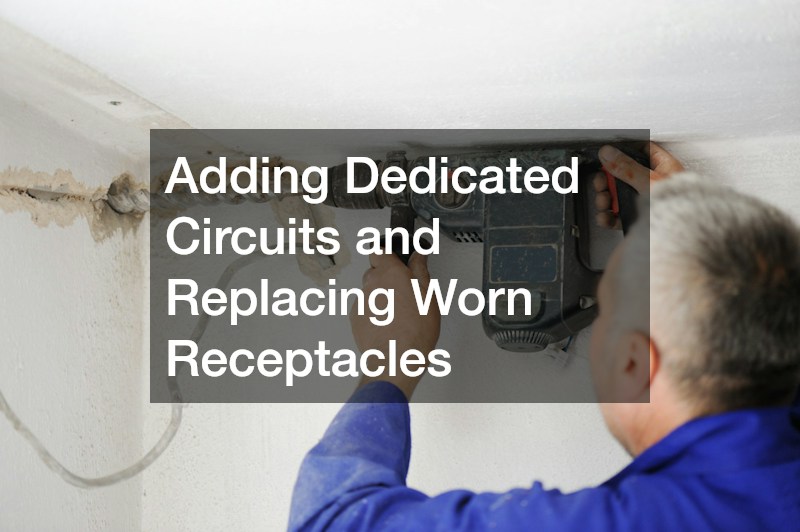
Modern households place heavy demands on wiring that was often designed for far fewer devices. Kitchen appliances, home offices, entertainment systems, and electric vehicle chargers share circuits that were never meant to carry such loads. Overloaded circuits trip breakers, overheat conductors, and stress connections. Worn receptacles add risk of their own, with loose contacts that let plugs fall out, scorched faces that signal arcing, and two-prong outlets that lack a ground path for fault current.
A licensed local electrician begins with a load evaluation to identify overloaded circuits, then installs new dedicated lines for high-demand appliances, heating and cooling equipment, workshops, and vehicle chargers. Worn or damaged receptacles are replaced with tamper-resistant devices, and ungrounded outlets are upgraded with grounded circuits or GFCI protection where code allows. AFCI and GFCI protection is added in required locations, connections are torqued to specification, and the panel is checked for capacity and safety. A whole-home surge protector can also be added to shield sensitive electronics from spikes caused by storms and utility switching.
Locating Hidden Leaks and Replacing Corroded Supply Lines
Water supply lines run hidden through walls, floors, and slabs, and their failures often go unnoticed until damage is extensive. Galvanized steel corrodes from the inside, narrowing the bore and reducing water pressure until rust breaks through. Copper can develop pinhole leaks from aggressive water chemistry, and aging fittings loosen over time. Slow leaks saturate framing and subfloors, feed mold, and raise water bills long before visible stains appear.
Experienced plumbers locate hidden leaks using acoustic listening devices, thermal imaging cameras, and isolation pressure tests that narrow the source to a single line before opening walls or floors. Corroded supply lines are replaced with PEX-A tubing using cold-expansion fittings or Type L copper, often routed through a central manifold with individual shutoffs. Pressure-reducing valves, thermal expansion tanks, and quarter-turn ball valves protect the new system, and a final pressure test confirms the repairs before walls are closed.
Patching Storm-Damaged Shingles and Resealing Vent Boots
Severe weather can damage shingles in ways that are not visible from the ground. Hail fractures the mat beneath the granules, wind lifts tabs and breaks their adhesive seals, and flying debris punctures the surface. Plumbing vent boots present another common weakness, as rubber collars dry out and crack under ultraviolet exposure, opening a gap that sends water down the pipe into the attic and wall cavities. These small openings allow water to soak decking and insulation over time.
Qualified roofers inspect the surface after major storms, documenting damaged shingles and checking every penetration. Fractured, creased, or missing shingles are replaced with matching material fastened with ring-shank nails and sealed in high-wind areas. Cracked vent boots are replaced with durable silicone or lead flashings sealed beneath the upslope shingles, and exposed nail heads are covered with sealant. Damaged decking is replaced as needed, and attic ventilation is checked to keep the assembly dry. Photos and notes from the inspection also help support an insurance claim when storm damage is extensive.
Sizing New Cooling Equipment and Pairing Matched Components

Choosing new cooling equipment by square footage alone often leads to systems that are too large or too small. Oversized units cool quickly but shut off before removing enough humidity, leaving rooms cool but clammy and wasting energy through frequent cycling. Undersized units run constantly and struggle on the hottest days. Pairing a new outdoor condenser with an old indoor coil, or mixing components from different product lines, prevents the system from reaching its rated efficiency.
Professional ac installation companies begin with a Manual J load calculation that considers insulation levels, window performance, air leakage, and orientation. Equipment is selected to match the calculated load, often using variable-speed or two-stage compressors that run longer, quieter cycles and remove more humidity. The outdoor condenser and indoor coil are installed as an AHRI-matched pair, line sets are brazed under a nitrogen purge, and the system is evacuated below 500 microns and charged by weight before airflow and refrigerant performance are verified.
Cleaning Dirty Coils and Testing Seasonal Safety Controls
Heating and cooling equipment works hardest during the extremes of summer and winter, and neglected components fail when they are needed most. Dust and debris coat indoor and outdoor coils, reducing heat transfer and forcing compressors to work harder. Blower wheels collect grime that restricts airflow, and capacitors weaken under heat. On the heating side, flame sensors oxidize, igniters become brittle, and safety switches that protect against overheating and venting failures may stop working reliably.
Consistent HVAC maintenance includes cleaning indoor and outdoor coils, removing and cleaning blower wheels, replacing filters, and flushing condensate lines. Technicians test capacitors, contactors, and motors, verify refrigerant charge with superheat and subcooling readings, and tighten electrical connections. Before heating season, flame sensors are cleaned, igniters inspected, and high-limit switches, pressure switches, and rollout switches tested, while a combustion analysis and carbon monoxide check confirm safe operation. Scheduling these visits each spring and fall keeps equipment ready before peak demand arrives.
Excavating Backyard Basins and Spraying Reinforced Gunite
A backyard swim area must withstand constant pressure from the water inside and the soil outside. Expansive clay swells and shrinks around the shell, groundwater can push upward when the basin is drained, and poorly compacted backfill settles unevenly. Shells built without adequate reinforcement crack, leak, and wash away supporting soil, damaging decks and coping. Placement matters as well, since basins located in low spots or beneath large canopies collect runoff and debris.
Professional pool installation begins with a site evaluation and soil report, followed by precise excavation to the planned dimensions and depth. Crews set a grid of steel rebar tied at engineered spacing with proper clearance from the soil, then pneumatically apply gunite to the specified thickness, compacting it as it is placed. The shell is kept moist during curing to reach full strength. Plumbing is pressure-tested, hydrostatic relief valves are installed, and an equipotential bonding grid ensures electrical safety. Barriers, alarms, and self-latching gates complete a backyard retreat that is safe for every member of the household.
Compacting Paver Bases and Building Drained Retaining Walls
Outdoor living spaces depend on what lies beneath them. Patios and walkways laid over thin or poorly compacted bases settle into ruts and dips, joints open, and weeds and ants move into the gaps. Retaining walls hold back tons of soil that grows heavier when saturated, and walls built without drainage or proper footing lean, bulge, and eventually collapse. Surface water from poorly graded patios can also flow toward the house, saturating the soil near the foundation.
Quality hardscaping begins with excavation to the required depth and installation of geotextile fabric, followed by a crushed aggregate base compacted in lifts with a plate compactor. A screeded sand bedding layer supports the pavers, edge restraints lock the field in place, and polymeric sand stabilizes the joints, with patios pitched away from the house. Retaining walls are built on compacted gravel leveling pads, reinforced with geogrid at engineered intervals, and backfilled with drainage stone around a perforated pipe that relieves pressure behind the wall.
A home stands strongest when its boundaries, systems, and spaces work together. Sturdy perimeter structures, healthy landscaping, and sealed entry points keep weather, intruders, and pests outside. Safe wiring, reliable plumbing, sound shingles, and well-maintained heating and cooling equipment keep the interior comfortable and secure. Thoughtfully built outdoor living spaces expand how the property is used and add value that lasts for decades.
Maintaining that strength requires a steady routine. Seasonal inspections of perimeter structures and landscaping, regular pest monitoring, periodic electrical and plumbing evaluations, storm checks of the shingles, and twice-yearly mechanical service catch problems before they spread. Investing in proper installation and quality materials from the start reduces future repairs and keeps every part of the property performing as intended.
The reward is a home that feels secure, comfortable, and complete. Boundaries hold firm, systems run smoothly, and outdoor and indoor spaces remain inviting year after year. By strengthening every layer that defines the property, homeowners protect both their investment and the everyday life that unfolds within it.