A soggy lawn, a flooded flower bed, or a driveway that turns into a shallow lake every time it rains can feel like a problem you should be able to solve yourself. Many homeowners spend weekends digging trenches, buying bags of soil, or rearranging downspouts, only to watch the same puddles return after the next storm. If you have tried the easy fixes and your yard still will not drain properly, it is time to understand what is really happening beneath the surface. This guide walks through the common causes of yard drainage trouble and helps you figure out when a bigger, more permanent solution is needed.
Recognizing when your DIY drainage fixes aren’t working
Most homeowners start with simple solutions like adding mulch, digging shallow ditches, or moving a downspout extension a few feet. These fixes sometimes help for a season, but if water keeps returning to the same low spots, the underlying issue is usually structural rather than cosmetic. A yard that stays wet for more than 24 to 48 hours after rainfall is sending a clear signal that something deeper needs attention.
Persistent problems often show up as cracked foundations, mosquito swarms, or grass that dies in the same spot every year no matter how much reseeding you do. If you have tried three or four different at-home remedies without lasting results, continuing to guess at solutions can waste time and money. Recognizing this pattern early can save you from more expensive repairs down the road.
- Water pools in the same spot for two or more days after rain
- Grass consistently dies or turns yellow in low-lying areas
- Foundation walls show cracking, bowing, or efflorescence
- DIY trenches or French drains fill up but never fully empty
What’s really causing the water to pool
One of the most overlooked culprits behind poor drainage is the composition of the soil itself. Compacted clay soil, common in many newer subdivisions where topsoil was stripped during construction, sheds water instead of absorbing it, leaving puddles that can linger for a day or more after a storm. Sandy soil presents the opposite problem in some spots, draining almost instantly, while just a few feet away water sits stubbornly on the surface because of underlying rock, hardpan, or compacted subsoil left behind by heavy equipment.
A simple test can reveal which situation you’re dealing with: dig a hole about a foot deep, fill it with water, and see how long it takes to drain. If it takes more than a few hours, compaction or clay content is likely the issue.
Bringing in quality topsoil and blending it properly with the existing soil, typically at a ratio of a few inches worked into the top six to eight inches of ground, can significantly improve absorption. That said, this fix only works if the grading beneath it directs water away from the house rather than toward it.
Many homeowners assume adding topsoil alone will solve their drainage woes, but soil type is just one piece of a larger puzzle that includes slope, compaction, and existing hardscaping. Clay-heavy soil, for instance, can hold water like a bowl, while sandy soil drains too fast to support healthy plant roots. Layering fresh topsoil on top of compacted clay without addressing the base underneath often just creates a soggy sponge that holds moisture even longer.
A simple perc test can tell you a lot about what you’re working with. Dig a hole about 12 inches deep and 12 inches wide, fill it with water, let it drain once, then fill it again and time how long it takes to empty. A healthy drainage rate falls between 1 and 2 inches per hour; anything slower than that suggests compacted or clay-based soil that will need amending.
If water sits for hours without moving, the soil itself may need to be amended or replaced entirely. Grading also matters here — most yards need at least a 2% slope, or about a quarter inch of drop per foot, moving away from the foundation. Without that slope, even the best soil mix in the world will still let water collect in low spots near patios, walkways, or planting beds.
The health risks of standing water in your yard
Standing water is not just an eyesore, it is an active health hazard for anyone living on the property. Mosquitoes can breed in as little as a tablespoon of stagnant water, and other pests like rodents and ants are drawn to consistently damp areas near a home’s foundation. When drainage problems persist for weeks or months, many homeowners find themselves calling pest control services to manage infestations that would not exist if the water were properly redirected.
Beyond insects, chronic moisture can encourage mold and mildew growth on siding, fences, and outdoor structures. This creates an ongoing cycle where pest issues and water damage feed into one another, making both problems harder to fully resolve. Addressing the root drainage issue is almost always more effective long term than repeatedly treating the symptoms.
- Mosquito populations increase significantly near standing water
- Damp soil attracts termites, ants, and rodents seeking shelter
- Mold can spread from soil onto fences, siding, and outdoor furniture
- Recurring pest treatments without drainage fixes rarely solve the problem long term
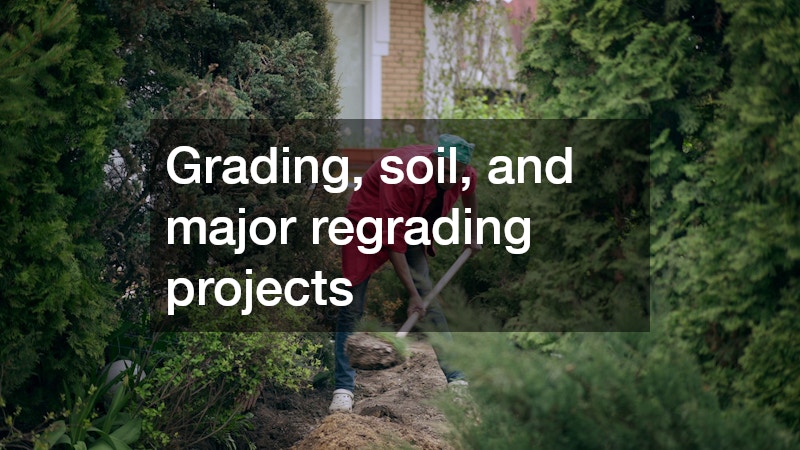
Grading, soil, and major regrading projects
Sometimes the fix is not about the soil at all but about the slope of the land itself. Yards are supposed to slope gently away from the home, typically at least six inches of drop over the first ten feet, to direct water away from the foundation. When previous owners, landscaping projects, or years of settling have flattened or reversed this slope, water has nowhere to go but toward your house.
You can get a rough sense of your own grading with a simple test: set a level on a long board at the foundation and walk it outward, or use stakes and a string line with a line level to measure the drop over distance. If you notice puddling near the foundation after rain, peeling exterior paint, or a damp crawl space, these are often signs that the grade near the house has become flat or is even tilting inward. A change of just an inch or two the wrong way across ten feet can be enough to send water where you don’t want it.
Fixing minor grading issues might mean adding and compacting soil in low spots, a job many homeowners can tackle over a weekend with a few yards of fill dirt. But when the problem is widespread, involves multiple low areas, or requires moving large volumes of soil across the whole property, you’re looking at a true regrading project. This often calls for heavy equipment like a mini excavator or skid steer, careful attention to existing utility lines, and enough grading expertise to avoid simply shifting the water problem to a different part of the yard or onto a neighbor’s property.
Regrading a yard is heavy work that involves moving significant amounts of earth, and it often requires equipment most homeowners do not own, such as skid steers, laser levels, or compaction rollers. A general rule of thumb is that yards needing more than a few inches of slope correction, or drainage problems spanning more than a few hundred square feet, have moved well beyond the scope of a shovel-and-wheelbarrow weekend project.
This is one of the clearest signs that a project has outgrown DIY and needs a licensed building contractor who understands local drainage codes and can coordinate excavation safely. Most municipalities require a minimum slope of about 2% (roughly a quarter-inch of drop per foot) directing water away from the foundation, and getting this wrong can trigger code violations or void a warranty on future foundation repairs.
A professional grading plan also accounts for utility lines, septic fields, tree roots, and neighboring properties, which are easy details to miss when tackling the job alone. Contractors typically pull utility locates before digging, calculate cut-and-fill volumes to avoid over-ordering soil, and check how altered runoff might affect a neighbor’s property line to prevent future disputes. These considerations can turn a simple-looking regrade into a project requiring permits, inspections, and careful sequencing that only an experienced professional can manage properly.
- Yards should slope away from the foundation at a gradual, consistent grade — typically a 2% slope, or about a 2-inch drop for every 10 feet
- Grading that’s too steep can cause erosion, while grading that’s too flat lets water pool near the foundation
- Regrading often requires excavation equipment beyond typical homeowner tools, such as skid steers, grading rakes, or laser levels for precision
- Soil composition matters too — heavy clay compacts and sheds water differently than sandy or loamy soil, which may need amending
- Utility lines and tree roots must be mapped before major digging begins to avoid costly damage or safety hazards
- Calling 811 (or your local utility locate service) before digging is standard practice in most areas
- A licensed professional can pull permits where local codes require them, particularly for large-scale regrading or drainage systems tied into municipal storm lines
Clearing yard debris and old landscaping materials
Before any real drainage solution can be installed, the yard often needs to be cleared of old materials that are blocking natural water flow. Broken pavers, dead shrubs, rotting mulch beds, and forgotten construction debris from past projects can all trap water and prevent it from reaching drains or lower ground. Renting a dumpster or scheduling a junk pick up service is frequently the first practical step before any digging or regrading begins.
Clearing this debris also gives you a clearer view of the actual slope and low points in your yard, which is essential information before deciding on a drainage plan. Skipping this step can mean discovering hidden problems, like buried debris or old drainage pipes, halfway through a project. Starting with a clean, visible landscape makes every following step more accurate and efficient.
- Old mulch and leaf piles can trap water against foundations
- Broken pavers or forgotten construction scraps block natural runoff paths
- A clear yard makes it easier to spot true low points and slope issues
- Removing debris first prevents surprises during excavation or regrading
How poor drainage can affect your home’s systems
Water does not stay politely in the yard when drainage fails; it finds its way into basements, crawl spaces, and mechanical rooms. Flooded basements can short out wiring and damage electrical panels, which is why many homeowners dealing with chronic yard flooding eventually search for an electrician near me to inspect outlets and panels for water intrusion. Even minor seepage over time can corrode connections and create fire hazards that are not immediately obvious.
Standing water near or under a home can also damage heating equipment housed in basements or crawl spaces. Furnaces sitting in damp conditions are prone to rust, electrical shorts, and reduced lifespan, and in severe cases homeowners end up needing a furnace replacement years earlier than expected. Protecting your yard’s drainage is really about protecting every system connected to your home, not just the lawn itself.
- Flooded basements can damage electrical panels, outlets, and wiring
- Water intrusion near mechanical rooms accelerates rust and corrosion
- Furnaces and water heaters are vulnerable when installed in damp areas
- Addressing yard drainage protects HVAC and electrical investments long term
Fences and property boundaries and drainage
Fences can unintentionally become part of your drainage problem, especially if they run along the natural low point of a property or sit on solid concrete footings that block water flow entirely. A privacy fence installed without drainage gaps can act like a small dam, causing water to pool along one side during heavy rain. If you are planning new fencing or replacing an old one, this is a detail worth discussing before installation begins.
A knowledgeable fence contractor can position posts and panels to allow for natural water movement, sometimes by adding small gaps at the base or choosing materials that do not obstruct runoff. This is particularly important on sloped properties or in neighborhoods where water naturally funnels between adjoining yards. Coordinating fencing decisions with drainage planning prevents future disputes with neighbors over water running onto their property.
- Solid fence footings can trap water along property lines
- Gaps or gravel strips at the base of fences allow natural runoff
- Sloped yards need extra consideration when planning new fence lines
- Coordinating fencing and drainage work avoids conflicts with neighbors
Roof runoff and gutter systems
A significant amount of yard flooding actually starts on the roof, not the ground. Gutters and downspouts are designed to carry rainwater away from the house, but clogged gutters, undersized downspouts, or damaged flashing can dump far more water into one area of the yard than the soil can handle. Walking your property during a rainstorm can reveal exactly where roof runoff is overwhelming your landscaping.
If gutters are consistently overflowing or downspouts are pouring water directly next to the foundation, it may be time to consult a roofing contractor rather than continuing to adjust the yard around the problem. They can assess whether the roof’s drainage system is properly sized for your home and recommend extensions or additional downspouts where needed. Fixing the source at the roofline often reduces the burden on ground-level drainage solutions significantly.
- Clogged or undersized gutters can overload specific areas of the yard
- Downspouts should extend water at least four to six feet from the foundation
- Damaged flashing can send water into places it was never meant to go
- Roof-level fixes often reduce the need for extensive yard regrading
Indoor plumbing, kitchen drains and remodeling projects
Not all yard drainage issues originate outside the home. Cracked sewer lines, aging septic connections, or grease buildup from kitchen drains can cause water and waste to surface in the yard, particularly near septic fields or older plumbing runs. Restaurants and some homes with heavy cooking use rely on a grease trap service to prevent fats and oils from solidifying in pipes, and residential kitchens can face similar buildup issues over time if grease is regularly poured down the drain.
If you are already dealing with plumbing concerns, it can be worth addressing them alongside a kitchen remodel, since updating pipes and drain lines during a renovation is far less invasive than digging them up later. Older homes especially benefit from inspecting cast iron or clay pipes that may be contributing to slow drains and eventual yard saturation. Planning these updates together saves both money and disruption compared to tackling each problem separately.
- Grease buildup in kitchen drains can contribute to slow or backed-up plumbing
- Aging sewer or septic lines sometimes surface as wet patches in the yard
- Combining plumbing updates with a kitchen renovation reduces repeated digging
- Older clay or cast iron pipes are common culprits behind hidden leaks
Yard drainage problems rarely have a single cause, which is exactly why simple DIY fixes often fall short over time. Whether the issue traces back to soil composition, roofline runoff, aging pipes, or the slope of the land itself, understanding the full picture is the first step toward a lasting solution. Take time to observe your yard during and after rainfall, note where water consistently collects, and use that information to decide which professionals need to be involved. Addressing the real cause now can protect your home’s foundation, systems, and landscaping for years to come.