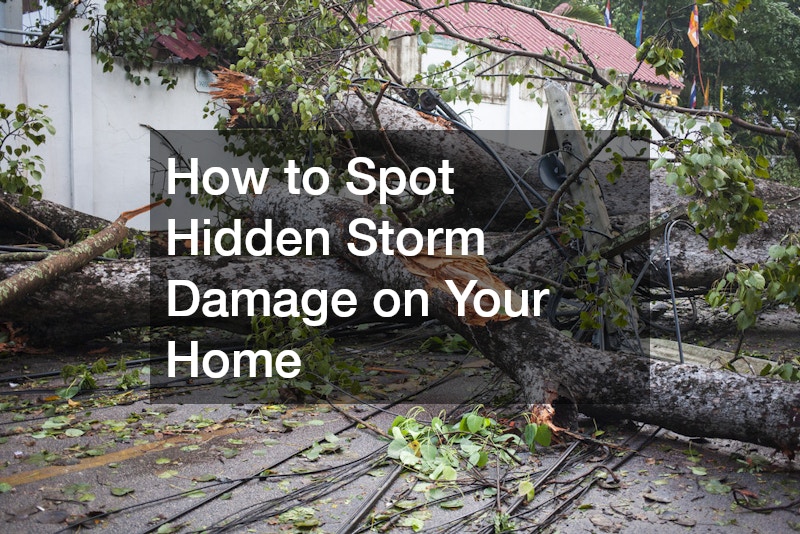
Storms rarely announce the full extent of what they’ve left behind. Wind, hail, and heavy rain can compromise a home’s structural integrity in ways that aren’t visible from the ground — or even obvious on a close inspection unless you know what to look for. Insurance claims data consistently shows that delayed damage discovery leads to significantly higher repair costs, because secondary problems like mold, rot, and insulation failure develop quickly once water finds a path in. The question isn’t just whether your home was damaged — it’s whether you’ve found all of it.
Start on the Roof, but Don’t Stop at Shingles
The roof is the obvious place to begin, but homeowners often limit their inspection to obvious missing or curled shingles and miss the subtler signs that matter more. Hail impact, for instance, doesn’t always crack a shingle — it bruises the asphalt granule coating, leaving soft spots that accelerate weathering over the following months. Run a gloved hand along shingle surfaces after a hail event. If you feel a soft, spongy depression rather than a firm surface, that shingle has lost its protective integrity even if it looks intact from below.
Check the gutters and downspout outlets for an accumulation of granules. Some granule loss is normal on older roofs, but a substantial deposit following a storm — enough to fill a cupped handful — indicates surface degradation that will compromise the shingle’s remaining lifespan. On metal roofs, look for paint chipping or small dents in consistent patterns, which are characteristic of hail rather than random debris impact.
Flashing around chimneys, skylights, and roof valleys deserves particular attention. High winds peel flashing at the edges before they strip full shingles, and a lifted flashing corner is a direct water entry point that won’t be visible from inside the home until significant damage has already occurred.
What the Attic Tells You That the Exterior Won’t
The attic is one of the most diagnostic spaces in a post-storm inspection, yet most homeowners skip it entirely. Wait 24 to 48 hours after a storm and inspect the attic on a dry day with a flashlight — any water intrusion will show as dark staining on the roof decking, wet insulation, or visible daylight through small gaps near the ridge or eaves.
Wet insulation is particularly costly to overlook. Fiberglass batts lose a significant portion of their R-value when saturated and don’t recover it when they dry out. Spray foam remains effective when wet, but it can conceal moisture problems behind its surface. If insulation feels damp or smells musty within a week of a major storm, treat it as a replacement issue, not a drying-out situation.
Also check the attic for signs of wind uplift — nails pulling through the decking, shifted or cracked decking panels, or daylight visible along the ridge board. These indicate that roof framing may have been stressed even if the exterior shingles held in place.
Siding, Windows, and the Gaps Between
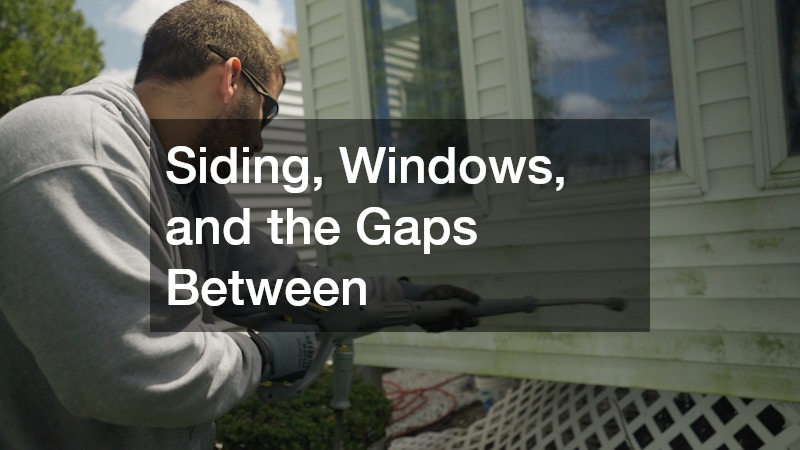
Wind-driven rain doesn’t just penetrate through obvious holes — it finds its way through gaps that storms widen. After any storm with sustained winds above 50 mph, inspect the caulking around every window and door frame on the exterior. Press the existing caulk with a fingertip; if it compresses easily or shows cracking along its length, it’s no longer creating a seal. Recaulking costs under $20 in materials and prevents water intrusion that can rot framing within a single winter.
Vinyl siding warps and cracks under hail impact in patterns that are easy to misread as purely cosmetic. The structural concern isn’t the cracked panel itself — it’s the gap it creates behind the panel where wind-driven moisture can pool against the house wrap or building paper underneath. Probe any cracked or shifted panel from the bottom edge. If it moves more than a quarter inch in either direction, the locking channel has likely failed and the panel needs replacement, not just patching.
Windows deserve a close look along the glazing compound — the putty seal between glass and frame. Hail can crack glazing compound without cracking the glass itself, and that hairline failure becomes a reliable cold-air and moisture path every winter.
Foundation and Drainage — the Damage That Develops Slowly
Storm damage to drainage systems is among the most financially serious and least recognized category of post-storm problems. Heavy rainfall can shift soil away from foundation walls, reversing the grade that was designed to carry water away from the structure. Check the ground slope against your foundation within a week of a major rain event. Water pooling within 6 feet of the foundation after rain stops is a grade problem that, left unaddressed, drives hydrostatic pressure against basement walls and footings.
Downspout extensions frequently detach during storms. Without them, roof runoff discharges directly against the foundation. Reconnect or replace missing extensions so water discharges at least 4 feet from the building perimeter — extensions cost $10 to $20 each and prevent damage that can run into thousands of dollars in waterproofing repairs.
Window wells on basement windows can fill with debris and hold standing water against the window frame after a storm. Clear them within 24 hours of a storm and confirm the drain at the well’s base isn’t blocked. A clogged window well drain is a common source of basement flooding that gets misattributed to foundation failure.
Knowing When a DIY Inspection Reaches Its Limit
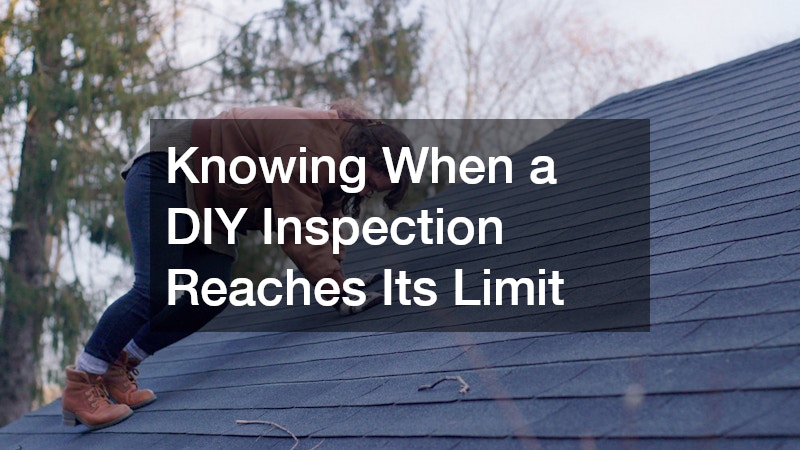
A thorough self-inspection covers a lot of ground, but there are categories where the consequences of a missed diagnosis are severe enough that professional assessment is the right call. Structural roof framing, chimney integrity, and any situation where you’ve found water staining but can’t identify its source all warrant a professional evaluation.
On the question of timing: storm damage claims typically have filing windows of one to two years under most homeowner insurance policies, but many policies require prompt notice of a loss. Waiting several months to have damage documented by a professional can complicate a valid claim. When local roofers assess storm damage, they provide written documentation that serves both the repair estimate and the insurance claim — getting that inspection on record quickly matters.
DIY versus professional inspection isn’t a binary choice. Self-inspecting first lets you inventory visible damage, photograph it systematically, and have an informed conversation with any contractor you bring in afterward.
After the Inspection — Prioritizing What You’ve Found
Walk through your inspection findings and sort them into two categories: water entry points and everything else. Anything that allows water into the structure — damaged flashing, failed caulking, cracked roof decking, shifted siding — should be addressed within two to four weeks of discovery, regardless of how minor it appears. Water damage compounds faster than most homeowners expect; a minor roof penetration can produce mold colonies within 48 to 72 hours under the right temperature and humidity conditions.
Cosmetic damage — dented gutters, surface paint chipping, cracked vinyl panels that still seal properly — can be scheduled on a longer timeline without meaningful risk of secondary damage. Prioritizing correctly isn’t just about cost management; it’s about directing your attention and budget where the risk is highest.
Document everything with dated photographs before any repairs begin. If an insurance claim is involved, resist the urge to make permanent repairs until an adjuster has inspected — temporary weatherproofing like tarping is appropriate and necessary, but permanent work done before documentation can affect claim eligibility.
Making Your Inspection Count
A post-storm inspection is only as useful as the follow-through it prompts. Pick a consistent inspection sequence — roof, attic, siding, windows, foundation drainage — and work through it the same way every time so nothing gets skipped in the adrenaline of the moment. Photograph each area before and after any temporary repairs, note the date of the storm and the date of your inspection, and keep that record with your homeowner insurance policy documents. Storms are unpredictable, but the damage they leave behind responds well to methodical attention. The homeowners who catch hidden damage early almost always spend less and face fewer complications than those who wait for the evidence to become undeniable.