A little soil washing away after a heavy rain is normal, but when gullies deepen, foundations shift, or your yard starts losing entire sections of ground, you are dealing with something far more serious. Severe erosion does not fix itself, and ignoring it can lead to structural damage, flooded basements, and a yard that becomes unsafe to use. Knowing which warning signs require immediate professional attention can save you thousands of dollars and protect the long-term value of your property. This guide breaks down the erosion problems that go beyond simple DIY fixes and explains what steps to take next.
Identify the Warning Signs of Structural Soil Loss
 Erosion becomes a structural issue when soil loss starts affecting the things built on top of it, not just the appearance of your lawn. Cracks forming along your foundation, sunken patio slabs, or fence posts that suddenly lean are all signs that the ground beneath them is shifting or disappearing. Doorways and windows that stick or no longer close flush with their frames can also point to a foundation that’s settling unevenly due to washed-out soil. Pay attention to gaps between your foundation and the surrounding soil, especially after heavy rain. A gap wider than an inch, or one that grows noticeably over a season, suggests water is carrying soil away from beneath your home rather than draining around it. Similarly, pooling water near the foundation that never used to collect there is often an early warning that grading or soil structure has changed. Driveways and walkways offer their own clues. Slabs that tilt, separate at the seams, or develop a stair-step crack pattern usually mean the base material underneath has eroded and can no longer support the surface evenly. Retaining walls that bow outward or show horizontal cracking are especially serious, since they’re often the last barrier holding back a larger slope failure. These symptoms often develop slowly, which is why many homeowners do not notice the connection to erosion until the damage is significant. A good rule of thumb: if you notice two or more of these signs appearing within the same season, it’s worth having a professional assess whether erosion is compromising your soil’s load-bearing capacity.
Structural soil loss rarely announces itself with a single dramatic event. Instead, it shows up as a pattern of smaller clues that homeowners often dismiss as normal settling or seasonal ground movement. Watch for visible soil pulling away from your foundation, leaving gaps wider than an inch or two. Cracks in exterior walls that run diagonally, especially those wider than a quarter-inch, often indicate the ground beneath is shifting or washing away. Doors and windows that suddenly stick or won’t latch properly can signal that your foundation is settling unevenly due to lost soil support. Pooling water that lingers for more than 24 hours after rainfall, sinkholes or depressions in the yard, and exposed tree roots near your home’s perimeter are also red flags. Pay attention to leaning fences, sagging patios, or a driveway that has developed noticeable dips or slopes it didn’t have before. If you notice any of these signs, it is time to call in a professional rather than attempt a quick patch job. A trained inspector can determine whether the damage stems from surface erosion, subsurface drainage failure, or a compromised foundation footing — each requiring a different repair approach. Waiting too long can turn a moderate repair costing a few thousand dollars into a full excavation project running well into five figures.
- Visible gaps between your foundation and the surrounding soil, especially cracks wider than a quarter-inch
- Doors and windows that stick, no longer close properly, or have developed uneven gaps around the frame
- Pooling water near the base of your home after rain, particularly if it lingers more than a few hours
- Exposed tree roots or utility lines that were previously buried, signaling significant topsoil loss
- Sinkholes or sudden depressions in the yard, even small ones just a few inches deep
- Cracks running along interior walls or ceilings, often diagonal and near door frames
- A tilting or leaning fence, deck, or shed that once stood level
- Soil that feels unusually soft, spongy, or washes away quickly during light rainfall
Recognize When Drainage Problems Have Gotten Out of Control
Poor drainage is one of the leading causes of severe erosion, and it often starts small before escalating into a major issue. When water consistently pools in the same areas or carves visible channels across your yard, your existing drainage system is likely overwhelmed or improperly designed. This is especially common in yards with sloped terrain, compacted soil, or clay-heavy ground that does not absorb water efficiently.
An irrigation company can assess whether your sprinkler system is contributing to the problem by overwatering certain zones or creating runoff patterns that accelerate soil loss. Many homeowners are surprised to learn that a malfunctioning irrigation setup, rather than rainfall alone, is the primary driver of erosion in their yard. Getting a professional evaluation can pinpoint whether the fix involves rerouting water, adjusting sprinkler heads, or redesigning the entire system.
Understand the Role of Retaining Structures on Sloped Properties
Sloped yards are especially vulnerable to severe erosion because gravity constantly pulls soil and water downhill. Without proper support, slopes can lose several inches of topsoil in a single storm, undermining trees, gardens, and even structures at the base of the incline. This is one of the clearest situations where expert intervention is not optional but necessary for safety.
A well-built retaining wall does more than hold back soil; it redirects water flow and reduces the pressure that causes slopes to collapse. Poorly constructed or aging walls, however, can fail catastrophically, especially after heavy rain saturates the ground behind them. If you notice bulging, cracking, or leaning in an existing wall, this is a sign that the structure needs immediate evaluation before it gives way entirely.
- Bulging or bowing sections in an existing wall
- Water seeping through joints or cracks
- Soil visibly escaping from behind the structure
- Leaning posts or sections that were previously vertical
- Gaps forming at the base of the wall
Assess Soil Quality After Major Erosion Events
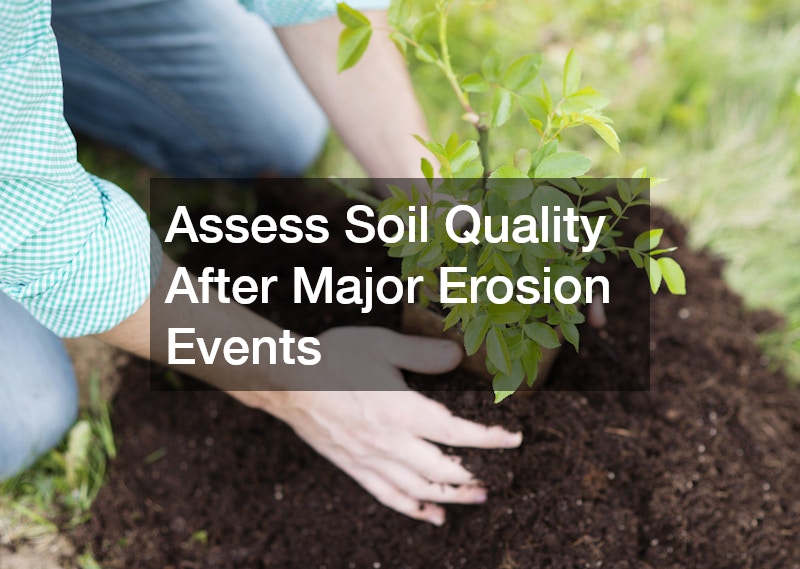
Once erosion has stripped away a significant layer of ground, the remaining soil is often nutrient-poor and structurally weak. Topsoil typically holds most of the organic matter and beneficial microbes, so losing even a few inches of it can expose subsoil that’s compacted, low in nitrogen, or heavy in clay. This makes it difficult for grass, shrubs, or garden beds to establish healthy roots, which in turn leaves the area even more vulnerable to future erosion. Testing the soil after a major event helps determine whether it needs amendments or a complete rebuild before any landscaping work begins. A basic test should check pH, nitrogen-phosphorus-potassium (NPK) levels, organic matter content, and drainage capacity. Many home improvement stores sell DIY kits for quick estimates, but sending a sample to a local extension office or soil lab gives far more accurate, actionable results. The findings will usually point to one of two paths. Mild depletion can often be corrected with compost, mulch, or targeted fertilizer applications over a growing season. Severe cases — where subsoil is exposed, compaction is extreme, or contamination from runoff is suspected — may require excavating the damaged area and bringing in fresh topsoil to rebuild a stable growing base. It’s also worth checking soil structure alongside nutrient content. Compacted, erosion-damaged soil often can’t absorb water effectively, which sets the stage for the next erosion event even after replanting. Aerating or amending for better drainage is frequently just as important as replacing lost nutrients.
After a major erosion event, the topsoil that once supported healthy plant growth is often stripped away entirely, leaving behind compacted subsoil, exposed clay, or rocky substrate that can’t sustain vegetation. In many severe cases, reworking the existing ground with organic matter and mineral amendments is the only way to rebuild a stable base for planting and grading. A soil test is the logical first step, since it reveals pH levels, nutrient deficiencies, and compaction issues that determine exactly which amendments the site needs. Adding compost, aged manure, or other soil conditioners restores the nutrients and structure needed to support root systems. In more depleted areas, contractors may also work in lime to correct acidity, gypsum to break up dense clay, or coarse sand to improve drainage in low-lying spots. The goal isn’t just to make the soil look healthy again, but to rebuild the underlying structure so it can hold moisture and resist future washout. Even with the right amendments, the site still needs to be properly graded and compacted to prevent the same erosion pattern from repeating itself. This typically means establishing a gentle slope of around 2% away from structures, along with strategically placed swales or berms to redirect runoff. Skipping this step means water will simply carve out the same channels again, regardless of how nutrient-rich the new soil is. This grading and compaction step is often overlooked by homeowners attempting a quick fix, who focus on surface appearance rather than the drainage patterns underneath. Without proper equipment to test compaction density and verify slope angles, it’s easy to unintentionally recreate the conditions that caused the erosion in the first place. That’s why professional grading is worth the investment, particularly on properties with a history of repeated erosion damage.
Rebuild Damaged Lawns With the Right Plant Choices
After severe erosion has damaged a lawn, simply reseeding the bare patches rarely produces lasting results. The underlying soil structure needs to be addressed first, and the plants chosen for replanting should be suited to the specific conditions of the damaged area, including slope, sun exposure, and moisture levels. Native grasses and deep-rooted ground covers are often better choices than standard turf because they help stabilize soil more effectively.
Visiting a local garden nursery can help you find plant varieties that are specifically suited to erosion-prone areas in your climate. Staff at these nurseries often have firsthand knowledge of which root systems perform best on slopes or in compacted soil, and they can recommend combinations of grasses, shrubs, and ground covers that work together to hold the ground in place. This kind of localized expertise is difficult to replicate with generic online advice.
Schedule Regular Upkeep to Prevent Future Erosion
Even after erosion damage has been repaired, ongoing care is essential to keep the problem from returning. Compacted soil, overgrown root systems, and neglected drainage paths can all contribute to a repeat of the same issues within a year or two. Consistent lawn care services help maintain healthy grass coverage, which acts as a natural barrier against soil displacement during heavy rain.
Routine landscape maintenance also includes tasks like aerating compacted soil, clearing debris from drainage paths, and monitoring slopes for early signs of instability. These smaller, regular tasks are far less expensive than addressing another severe erosion event down the road. Property owners who invest in consistent upkeep typically see fewer emergency repairs over time.
- Seasonal aeration to reduce soil compaction
- Regular inspection of drainage channels and downspouts
- Mulching to protect exposed soil between plantings
- Monitoring slopes and low-lying areas after storms
- Trimming vegetation that blocks proper water flow
Explore Hardscape Solutions for High-Risk Erosion Zones
In areas where erosion is severe and recurring, softscape solutions like grass and shrubs may not be enough on their own. Hardscaping elements such as terraced steps, gravel channels, and paved pathways can redirect water flow and reduce the amount of exposed soil vulnerable to washing away. These solutions are particularly useful in high-traffic areas or steep slopes where vegetation struggles to establish.
A hardscaping contractor can design features that blend functional erosion control with the aesthetic goals of your property, so the solution does not look purely utilitarian. Options range from simple stone borders to more elaborate terracing systems, depending on the severity of the slope and the amount of water runoff involved. Combining hardscaping with strategic planting often produces the most durable results.
Consider Functional Additions for Erosion-Prone Yards
Once the underlying erosion issues are addressed, some homeowners look for ways to make previously unusable areas of their yard functional again. Flat, well-drained sections created through regrading or terracing can be repurposed for features that would have been impossible on unstable ground. For example, backyard putting greens require a stable, well-graded base, making them a practical option for a yard that has been properly repaired after erosion damage.
Adding features like this not only restores the usability of your outdoor space but also encourages ongoing maintenance that keeps erosion from returning. A well-maintained lawn feature gives homeowners a reason to regularly inspect the surrounding soil and drainage, catching small problems before they escalate. This turns erosion recovery into an opportunity rather than just a repair project.
Work With Professionals to Plan a Long-Term Repair Strategy
Severe erosion rarely has a single cause, which means the most effective repairs usually involve more than one type of professional. A coordinated plan might include grading work, drainage correction, and plant selection all working together toward the same goal of long-term stability. Attempting to address only one piece of the puzzle often leads to the problem resurfacing within a season or two.
Comprehensive landscaping services can bring together the grading, planting, and drainage expertise needed to create a cohesive repair plan rather than a patchwork of separate fixes. Many homeowners also find it helpful to visit a garden center to gather ideas and materials for the softscape portion of their project once the structural work is complete. Combining expert planning with the right materials gives your yard the best chance of staying stable for years to come.
- Grading and drainage correction to redirect water flow
- Soil testing and amendment for healthy plant growth
- Erosion-resistant plant selection suited to your climate
- Hardscape features to reinforce vulnerable areas
- Ongoing maintenance scheduling to catch problems early
Severe erosion is not something to manage with a bag of grass seed and good intentions; it requires a clear understanding of what is causing the damage and a plan to address it at the source. Whether the solution involves regrading, a new retaining structure, or a complete overhaul of your drainage system, professional input can save you from repeating the same costly repairs. Start by identifying which warning signs apply to your property, then reach out to the appropriate specialists to build a long-term plan. Taking action now protects not just your landscaping investment, but the structural integrity of your home itself.