A soggy lawn, a cracked patio, or water pooling near your foundation might seem like minor annoyances, but they are often early warning signs of a drainage system under stress. Outdoor drainage does not take a season off, and neglecting it in any month can lead to expensive repairs down the road. Understanding how your yard, hardscaping, and home exterior work together to move water away is the first step toward protecting your investment. This guide breaks down what to watch for throughout the year so you can catch small problems before they become major headaches.
How Water Damage Builds Over Time
Drainage problems rarely appear overnight. Instead, they develop slowly as water repeatedly settles in the same low spots, saturating soil and gradually undermining structures nearby. What starts as a small puddle after rain can, over months or years, erode soil beneath walkways, patios, or even your home’s foundation.
The process is often invisible until the damage is significant. Soil that stays wet for 24-48 hours after every rainfall gradually loses its density, creating tiny voids underground that expand with each storm. Over a year or two, this can translate into sunken concrete slabs, hairline foundation cracks, or shifting pavers.
Freeze-thaw cycles make matters worse in colder climates, as trapped water expands and contracts repeatedly, widening cracks each season. By the time visible signs like standing water, mildew, or uneven flooring show up, the underlying erosion has usually been progressing for a long time.
The key to avoiding costly repairs is recognizing patterns early. If you notice the same wet spots appearing after every storm, puddles that linger more than 24 hours, or water pooling within 10 feet of your foundation, your yard is signaling a grading or drainage problem.
Track these patterns by season, since spring thaw and heavy autumn rains often reveal issues that dry summer months hide. A simple notebook or phone photo log of recurring trouble spots can help you spot worsening trends before they become expensive foundation or erosion repairs.
- Standing water that lasts more than 24 hours after rainfall, signaling poor drainage or soil compaction
- Soil erosion or exposed roots near downspouts, often visible as small trenches or bare patches in the lawn
- Cracks forming in nearby concrete or pavers, especially hairline cracks that widen after freeze-thaw cycles
- Uneven or sinking patches in walkways and patios, a sign that water has washed away the base material below
- A musty smell near the foundation or crawlspace, which often points to trapped moisture and potential mold growth
- Peeling paint or discoloration on lower exterior walls, indicating water is wicking up through the foundation
- Green algae or moss growth in shaded, low-lying areas that stay damp long after the rest of the yard has dried
Seasonal Changes That Affect Drainage Performance
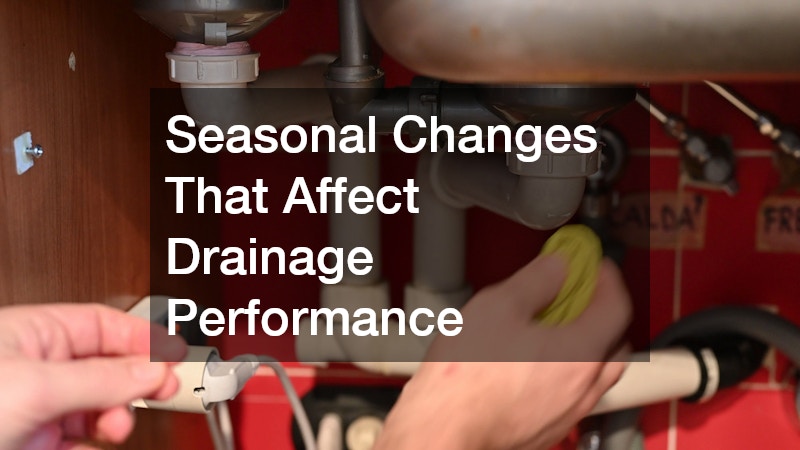
Each season places different demands on your outdoor drainage system. Winter freeze-thaw cycles can shift soil and crack pipes, while spring rains test the capacity of every gutter, swale, and drain line on your property. Summer droughts can compact soil, reducing its ability to absorb water when heavy storms finally arrive.
One of the most common issues homeowners face during transitional seasons is a clogged drain line, often caused by leaves, dirt, and debris accumulating over the fall and winter months. When water cannot flow freely through these lines, it backs up and finds the path of least resistance, which is frequently your basement or crawlspace. Regular seasonal inspections help catch blockages before they cause interior water damage.
The Role of Your Roof and Gutters

Your roof is the starting point for a huge percentage of the water that ends up in your yard. Poorly maintained gutters, damaged flashing, or missing shingles can send water cascading down in places it was never designed to go, overwhelming your ground-level drainage system. A qualified residential roofer can identify weak points in your roofline that contribute to excess runoff before it ever reaches your yard.
Gutters and downspouts should direct water at least five to ten feet away from your foundation. If they are clogged, undersized, or poorly positioned, even a well-designed yard drainage system will struggle to keep up during heavy rain.
- Inspect gutters for sagging or separation from the roofline
- Clear debris at least twice a year, more often near trees
- Extend downspouts away from foundation walls
- Check for granule buildup in gutters, a sign of roof wear
Grading and Landscaping Considerations
Proper grading is one of the most overlooked aspects of outdoor drainage. Your yard should slope gently away from your home, guiding water toward designated drainage areas instead of letting it pool near your foundation or walkways. As a general rule, experts recommend a slope of at least 6 inches of drop for every 10 feet of distance from the house, roughly a 5% grade, to keep water moving in the right direction.
Over time, settling soil, tree growth, and landscaping changes can alter this slope without homeowners even realizing it. A newly planted garden bed, an added patio, or even years of mulch buildup can inadvertently create small dams that redirect water toward your home instead of away from it. Tree roots can also lift and shift soil, creating low spots that turn into muddy puddles after every rainfall.
It’s worth walking your property after a heavy rain to spot problem areas before they cause real damage. Watch for water pooling near the foundation, erosion trails cutting through mulch beds, or soggy patches that take days to dry out. Addressing these issues early, whether through regrading, adding soil, or installing swales, can prevent costly foundation repairs and basement flooding down the road.
Proper grading is the foundation of any effective drainage system, and the overall slope of your yard should direct water away from your home’s foundation at a rate of about 2% grade, or roughly a 2-inch drop for every 10 feet. Over time, settling soil, tree roots, and old landscaping projects can quietly alter this slope, creating low spots where water pools instead of flowing away. Left unaddressed, these depressions can saturate soil near the foundation and lead to costly structural repairs down the road.
Tree stumps left in the ground can also interfere with proper grading, since their root systems often disrupt underground pipes and create uneven pockets beneath the surface. Stump grinding is often recommended after tree removal, not just for aesthetics but to restore proper soil contour and prevent future drainage obstructions. This process also eliminates hidden voids that can form as roots decompose, which might otherwise cause the ground above to sink or shift unexpectedly.
Similarly, when installing new walkways, driveways, or patios, working with experienced paving contractors ensures these surfaces are sloped correctly to channel water away rather than trapping it. Contractors typically build in a slight pitch, often around a quarter inch per foot, along with control joints or permeable materials to manage runoff. Skipping this step can result in standing water, ice buildup in colder months, or gradual erosion beneath the hardscape.
- Aim for a slope of about one inch per foot away from the home, extending at least 6-10 feet from the foundation
- Remove old stumps and roots that disrupt natural water flow, since decaying wood can create hidden channels or dams
- Use permeable materials like gravel, permeable pavers, or mulch beds where possible to reduce runoff
- Reassess grading after any major landscaping project, including new patios, garden beds, or fence installations
- Watch for low spots that develop over time from soil settling, and fill them with compacted topsoil
- Direct downspouts and swales toward a designated drainage area, such as a dry well or rain garden, rather than letting water pool near structures
Protecting Metal and Structural Features From Moisture
Outdoor metal features add durability and style to a property, but they are also vulnerable to moisture-related damage if drainage is poor. An iron fence, for example, can develop rust at the base if water consistently pools around its posts, weakening the structure over time and requiring costly repairs or replacement. Once rust penetrates below the surface, it can compromise the integrity of the metal, sometimes causing posts to crack or shift within just a few years in consistently wet conditions.
Other structural features are at similar risk. Metal railings, gates, light posts, and support beams for pergolas or decks can all suffer from trapped moisture, especially where they meet concrete footings or soil. Even a small amount of standing water—as little as a quarter inch left sitting for days after rainfall—can accelerate corrosion in untreated or poorly coated metal.
Ensuring proper drainage around fence lines and other metal installations helps preserve both function and appearance. Grading soil away from posts, installing gravel beds for water runoff, and periodically checking for pooling after storms are simple steps that extend the life of these features and reduce the need for premature replacement.
Decking materials face similar challenges when moisture is allowed to linger at ground level. Composite metal decking has become popular for its durability and resistance to rot compared to traditional wood, but it still requires proper drainage underneath to prevent moisture buildup and long-term structural issues. Trapped water can corrode fasteners, joists, and support brackets long before the surface material shows any visible wear.
Grading the soil beneath a deck to slope away from the house, at roughly a quarter-inch per foot, helps water move off the site instead of pooling under the structure. Adding a gravel base or perforated drainage pipe beneath the decking further reduces standing moisture, especially in yards with clay-heavy soil that drains slowly. Vapor barriers and proper ventilation gaps between boards also allow trapped humidity to escape rather than settling against metal components.
Installing decking without addressing ground-level water flow can shorten its lifespan significantly, regardless of the material’s quality. Even high-grade composite metal decking can develop rust stains, warping, or weakened joints within a few years if water is consistently allowed to collect beneath it. Routine inspections after heavy rain, checking for soft spots, discoloration, or slow-draining puddles, can catch these issues before they require costly repairs.
Outdoor Equipment and Drainage Compatibility
 Many homeowners forget that outdoor mechanical equipment depends on proper site drainage just as much as landscaping does. Central air conditioning units, for example, sit on concrete pads that can shift or crack if water repeatedly pools underneath them. Poor drainage near these units can also lead to efficiency problems and premature wear.
AC companies frequently recommend that units be installed on elevated, well-draining pads specifically to avoid this kind of damage. If you are already experiencing drainage issues near your equipment, it is worth having both the drainage and the unit inspected together, since one problem often accelerates the other.
- Keep at least a two-inch gap between the ground and unit base
- Clear vegetation and debris from around outdoor units regularly
- Watch for water pooling near condenser pads after storms
- Schedule combined inspections when replacing or repairing equipment
Garage Areas Are Often Overlooked
Garages are frequently built at ground level, making them especially susceptible to water intrusion when yard drainage is compromised. Water seeping under garage doors during heavy storms can damage stored belongings, promote mold growth, and even affect the door’s structural components over time.
When drainage problems persist near a garage, they can eventually lead to the need for garage door repairs, particularly if moisture causes warping, rust, or misalignment in the tracking system. Installing a small trench drain or adjusting the slope of the driveway near the garage entrance can prevent much of this damage before it starts.
When Drainage Problems Point to Bigger Structural Issues
Sometimes drainage issues are a symptom of a larger structural problem rather than the root cause. Old concrete slabs, deteriorating retaining walls, or outdated underground piping can all contribute to persistent water issues that no amount of surface-level landscaping can fix. In these cases, addressing the drainage properly may require removing the problematic structure altogether.
This is where residential demolition contractors sometimes become part of the solution, particularly when old patios, sheds, or driveways are trapping water against a home’s foundation. Removing these outdated structures allows for a fresh start with proper grading and modern drainage solutions built in from the beginning.
How Outdoor Drainage Connects to Indoor Comfort
It is easy to think of drainage as a purely outdoor concern, but water problems outside can quickly work their way indoors, especially in homes with finished basements or ground-level living spaces. Persistent moisture near the foundation can eventually lead to humidity issues, warped flooring, or damaged cabinetry inside the home.
Even features like quartz countertops in an outdoor kitchen or covered patio area can be affected indirectly, as excess ground moisture beneath the structure may accelerate wear on cabinetry and supports over time. Keeping outdoor drainage in good condition protects not just your yard, but the comfort and value of everything connected to it, inside and out.
Outdoor drainage is not a one-time project but an ongoing responsibility that changes with the seasons and the condition of your property. From your roofline to your foundation, and from fencing to mechanical equipment, every element of your outdoor space plays a role in how well water moves through and around your home. Taking a proactive approach now, rather than waiting for visible damage, will save you time, money, and stress in the long run. Start with a simple walk around your property after the next heavy rain and note where water lingers longest, then use that information to guide your next steps.