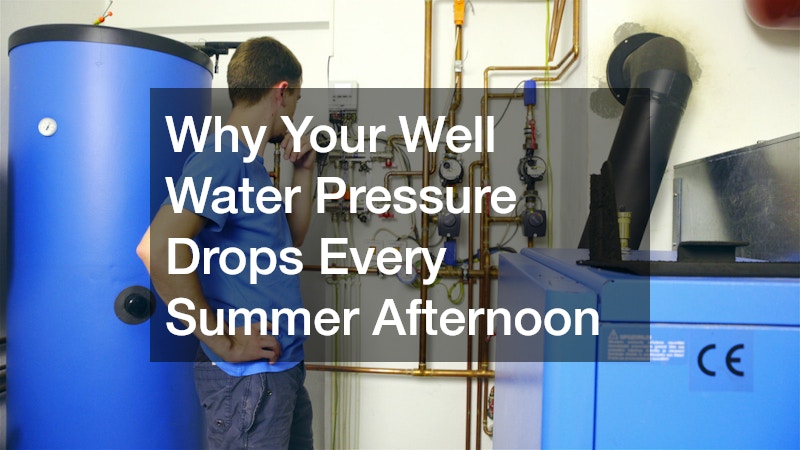
If your faucets sputter, your shower pressure fades, or your sprinklers slow to a trickle every afternoon in July and August, you are not imagining things. Summer places extra demands on private well systems at exactly the same time that groundwater levels are naturally lower, creating a predictable afternoon slump. Understanding why this happens can save you from unnecessary panic, help you spot a real mechanical problem when one exists, and guide you toward the right fix instead of guessing. Below is a breakdown of the most common causes and what you can do about each one.
Rising Household Water Demand During Hot Afternoons
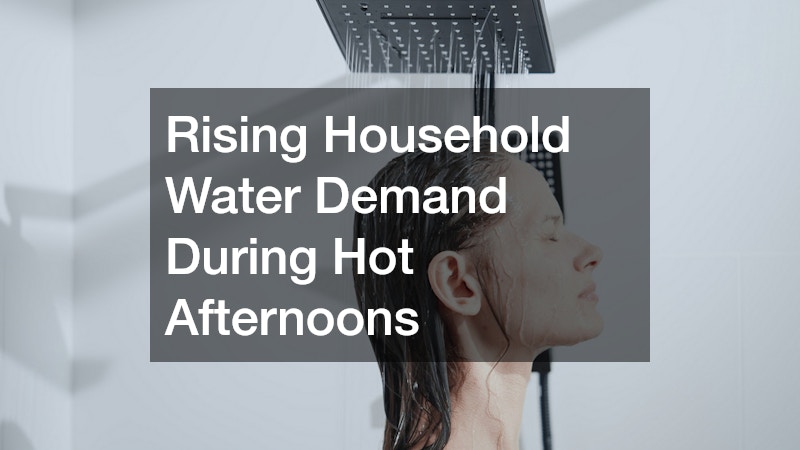
Summer afternoons are when household water use peaks, and that timing is not a coincidence. Lawn irrigation, garden hoses, filling pools, extra showers after yard work, and running the air conditioner condenser all draw from the same well supply within a few hours of each other. When demand spikes faster than your well and pressure tank can recover, pressure at the tap naturally drops.
This kind of drop is often temporary and resolves once demand eases in the evening. However, if it happens every single day like clockwork, it is worth tracking your usage patterns to see if you can spread out heavy water tasks.
- Watering the lawn in early morning or late evening instead of midday
- Running the dishwasher or washing machine during off-peak hours
- Filling pools gradually over several days rather than all at once
- Staggering sprinkler zones instead of running them all simultaneously
Seasonal Groundwater and Aquifer Level Changes
Wells draw from underground aquifers that rise and fall with rainfall, snowmelt, and seasonal recharge. During summer, reduced rainfall combined with higher evaporation rates causes the water table to drop, sometimes by several feet. A shallower water table means your well has less water available to draw from, especially during periods of heavy afternoon demand.
This is a normal seasonal pattern in many regions, particularly areas that rely on shallow dug or driven wells rather than deep drilled wells. If your well was installed decades ago or was marginal in yield to begin with, seasonal fluctuations will be more noticeable and may require a longer-term solution like deepening the well or adding storage capacity.
Pressure Tank Waterlogging and Capacity Issues
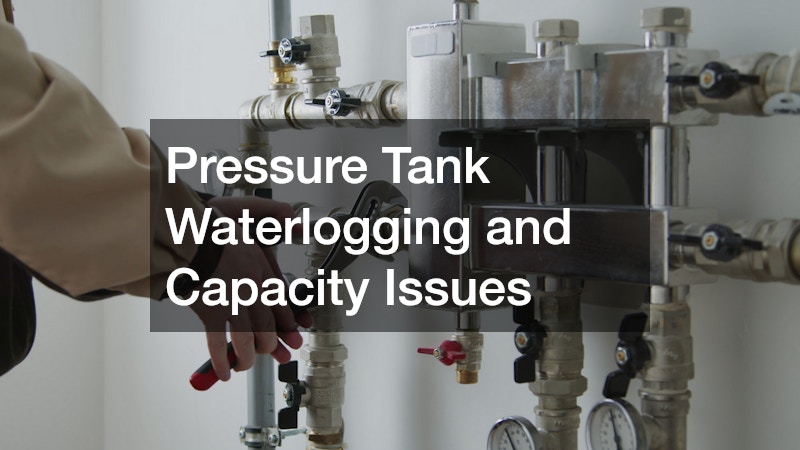
The pressure tank is what maintains steady water pressure between pump cycles, and a failing tank is one of the most common hidden causes of afternoon pressure drops. Over time, the air bladder inside the tank can weaken or the tank can become waterlogged, meaning it holds less air cushion and more water than it should. This forces your pump to cycle on and off more frequently, and under heavy summer demand it simply cannot keep up.
A tank that is too small for your household’s peak usage will also show its limits precisely when demand is highest. If you notice rapid pump cycling along with fluctuating pressure, it is worth having the tank’s pre-charge and overall condition checked before assuming the pump itself is at fault.
- Listen for the pump kicking on and off in short, rapid cycles
- Tap the tank to check if it sounds mostly full of water rather than air
- Check the pressure gauge for unusual swings during heavy use
- Confirm the tank size matches your household’s peak demand needs
Well Pump Wear and Reduced Output
Pumps work harder in summer, and that added strain can expose weaknesses that were not obvious the rest of the year. A pump nearing the end of its lifespan may still function under light demand but struggle to maintain volume and pressure when multiple fixtures are running at once. Worn impellers, a failing motor, or electrical issues can all cause output to drop specifically under load, which lines up perfectly with the afternoon pattern many homeowners notice.
If pressure problems are getting worse year over year rather than staying consistent, that is a signal the pump itself may be declining rather than the aquifer. In these cases, well pump repairs performed by a qualified technician can restore consistent output and are often more cost-effective than a full pump replacement if caught early. A professional evaluation can pinpoint whether the issue is mechanical, electrical, or related to the pump being undersized for current household demand.
Clogged Well Screens, Pipes, and Fixtures
Sediment, mineral scale, and biofilm can build up inside well screens, casing, and plumbing over years of operation, gradually restricting flow. This buildup often does not cause noticeable problems until demand increases, which is why it tends to show up as a summer-specific issue. Iron bacteria and calcium deposits are especially common culprits in older wells and can narrow the effective diameter of pipes and screens significantly.
Fixture-level clogs, like mineral buildup in aerators and showerheads, can also mimic a whole-house pressure problem when the issue is actually isolated. If pressure drops seem worse at specific faucets rather than throughout the house, start by cleaning aerators before assuming the well or pump is the culprit. When the problem is systemic, professional water well repair can address screen clogging, casing issues, or pipe scaling that home cleaning cannot reach.
- Remove and soak aerators and showerheads in vinegar to clear mineral buildup
- Watch for reddish or discolored water, a sign of iron bacteria
- Note whether pressure loss is isolated to one fixture or affects the whole house
- Consider a professional well inspection if clogging is suspected throughout the system
Nearby Septic Systems and Groundwater Interaction
While less common, a poorly maintained septic system can indirectly affect well water quality and, in some cases, contribute to plumbing issues if drain field effluent interferes with groundwater near a shallow well. This is more of a water quality and safety concern than a direct pressure issue, but the two systems share the same underground environment on most rural properties. Keeping your septic system properly maintained protects both your groundwater and your peace of mind.
Routine septic pumping every three to five years prevents the tank from overfilling and reduces the risk of effluent reaching areas near your well, particularly important if your well and septic system are less than the recommended distance apart. If you notice both plumbing slowdowns and any change in water odor or taste during summer, it is worth having both systems inspected together rather than treating them as unrelated.
Afternoon pressure drops in summer are usually a combination of higher household demand and naturally lower groundwater levels, but persistent or worsening symptoms point to a mechanical issue worth investigating. Pay attention to when and how the pressure loss happens, check the easy things like aerators and usage timing first, and bring in a professional if the pattern points to your pump, tank, or well itself. Addressing small issues now can prevent a complete loss of water pressure during the hottest, highest-demand weeks of the year.