The increasing frequency and severity of extreme weather events have fundamentally altered residential property maintenance. Modern homes routinely face unprecedented environmental stresses, including record-setting atmospheric rivers, hurricane-force wind gusts, prolonged deep freezes, and severe thunderstorms that place extraordinary physical stress on every protective barrier.
A residential building operates as an integrated system of structural envelopes and utility networks. When one component fails during a severe storm, the damage cascades rapidly throughout the entire property, turning minor exterior vulnerabilities into extensive interior destruction.
Proactive structural reinforcement is far more reliable and cost-effective than emergency disaster recovery. By executing targeted repairs across your home’s exterior envelope, entry points, drainage networks, mechanical equipment, and electrical systems, you establish durable layers of physical defense. Consider these essential repairs required to harden your property against destructive weather.
Upgrade Vulnerable Glass to Withstand Extreme Pressure

High-velocity winds generate intense pressure differentials around a building. When wind strikes an exterior wall, positive pressure builds on the windward side while negative suction pulls along the leeward side. If flying storm debris punctures a standard glass window, internal atmospheric pressure spikes dramatically. This trapped air seeks an immediate escape route, pushing upward against ceiling joists and lifting the roof deck off the framing. Replacing standard glass with modern energy efficient impact windows provides durable protection against this catastrophic scenario. These reinforced units feature a resilient polyvinyl butyral interlayer bonded between two panes of tempered glass. Even when struck by large branches or high-speed debris, the outer pane may fracture, but the tough inner membrane remains intact, preserving the building’s pressurized seal while lowering monthly heating and cooling costs.
- Examine window frames for rot or cracking that undermines the anchoring connection to wall studs.
- Scrape away dry caulking around exterior window perimeters and reapply elastomeric sealant to stop water intrusion.
- Test and lubricate latching assemblies to guarantee that multi-point locks engage deeply into structural strike plates.
- Prioritize glass upgrades on windward elevations and large spans like sliding doors that face high wind loads.
Seal and Secure the Façade Against Moisture Penetration
Wind-driven rain strikes building exteriors with extraordinary force during major storms, penetrating small gaps, degraded trim joints, and cracked siding panels. Exterior cladding directs water safely away from underlying wooden framing. When storm gusts catch loose panels, they can rapidly strip large sections away, leaving underlying sheathing exposed to torrential rains. Moisture penetrating behind unsealed exterior cladding fosters hidden wood rot, encourages mold growth, and causes interior drywall damage long before visible leaks emerge. Homeowners should schedule timely siding repairs well before storm season begins, ensuring that loose panels are securely refastened, warped sections are replaced, and building corners are tightly sealed against the weather.
- Walk the perimeter to press firmly on exterior panels, identifying loose fasteners or broken locking tabs.
- Inspect joints around window and door penetrations, renewing caulking where seasonal expansion has pulled sealant away.
- Trim dense shrubs and overhanging vegetation at least eighteen inches away from exterior walls to prevent moisture retention.
- Ensure that metal kick-out flashing along roof-wall junctions directs cascading runoff into gutters rather than behind cladding.
Conduct a Comprehensive Shingle and Flashing Audit
Aerodynamic lift generated as high winds rush over a roof ridge creates intense upward suction across shingles and underlayment. If your roof covering has loose shingles, unsealed tabs, or corroded fasteners, strong winds will rapidly peel the roofing material away, exposing raw plywood sheathing to soaking downpours. Similarly, metal flashing situated along roof valleys, dormers, chimneys, and plumbing vents acts as the primary barrier against water penetration at structural joints. Over time, seasonal thermal expansion can pull flashing away from decking, creating hidden paths for rushing water. Engaging qualified technicians for preventative local roofing repairs ensures that damaged shingles are replaced, lifting edges are re-adhered with commercial roofing cement, and compromised flashing is fully resealed before violent storm fronts arrive.
- Survey the entire roof line safely using binoculars to spot lifted, curling, missing, or blistered shingles across all planes.
- Examine flexible rubber boots surrounding plumbing vent pipes, replacing any boots showing sun damage or dry rot.
- Inspect attic spaces during daylight hours to identify water stains, rotted trusses, or daylight entering through ridge seams.
- Trim overhanging tree limbs within ten feet of the roof to prevent branches from scraping shingles or falling during storms.
Brace Large Openings Against Wind Load Blowouts
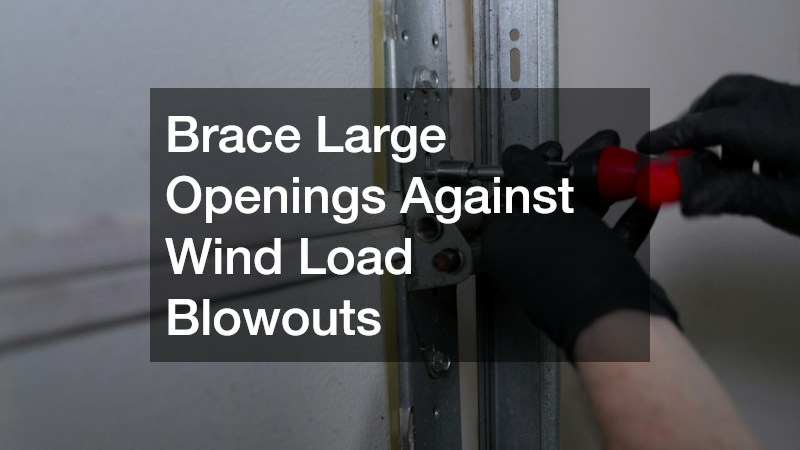
Standard residential garage doors represent the largest single opening in any home, making them extraordinarily vulnerable to wind-load failure. Because of its broad surface area, an unreinforced garage door acts like a sail, bearing thousands of pounds of pressure during severe wind events. If the door buckles inward under wind pressure or pulls away from its tracks due to negative suction, immense volumes of air enter the garage. This massive rush of air pushes upward against the garage ceiling and surrounding walls, frequently lifting the roof and causing adjacent living quarters to collapse. Homeowners must invest in dedicated garage door repair to reinforce mounting tracks, upgrade to heavy-duty commercial rollers, install reinforced horizontal struts, and ensure the entire door assembly satisfies stringent wind-load engineering standards.
- Inspect vertical tracks on both sides of the garage opening to confirm they are anchored securely into structural framing.
- Examine all torsion springs, lifting cables, and intermediate hinges for metal fatigue, excessive rust, or worn roller wheels.
- Install code-approved retrofit vertical bracing columns that anchor into the concrete foundation and ceiling header when severe weather threatens.
- Replace cracked bottom astragal weather seals to keep driving wind and rising stormwater from penetrating under the door.
Clear Water Pathways to Prevent Foundation Pooling
Torrential storms dump thousands of gallons of water onto a residential roof within a few hours. If your gutter system cannot swiftly collect and direct this deluge away from your home, water cascades over the edges and pools directly against foundation walls. Saturated soil expands significantly, creating intense hydrostatic pressure that forces moisture through microscopic foundation fissures, porous concrete blocks, and floor slab joints. Over time, unmanaged exterior runoff causes chronic basement seepage, destabilizes footings, and cracks structural masonry. Sustaining clear runoff pathways requires routine, comprehensive drain cleaning to extract packed leaves, pine needles, roofing gravel, and dirt silt from gutters, downspouts, underground drainage pipes, and yard surface catch basins.
- Clear all debris from gutters and flush downspouts using a garden hose to verify water discharges freely without backing up.
- Attach rigid extensions or subsurface piping to ensure downspout runoff discharges at least eight to ten feet away from foundation walls.
- Inspect perimeter French drains and exterior catch basins, cleaning silt and root intrusion from subterranean perforated pipes.
- Ensure that landscape soil grades slope away from foundation walls at a downward incline of at least six inches over the first ten feet.
Install and Test Sump Pumps and Backflow Valves
During severe storms and flash floods, municipal storm sewers frequently become overwhelmed by the sheer volume of surface runoff. When public utility mains reach maximum hydraulic capacity, sewage and street runoff reverse direction, forcing contaminated blackwater backward through residential sewer lines and into basements or ground-floor fixtures. This event ruins finished living spaces, destroys mechanical equipment, and introduces dangerous biohazards into the home. Property owners should consult with qualified emergency plumbers before storm season to assess drain lines, install backwater prevention valves, and service primary sump pump systems. Installing an automatic check valve prevents reversed municipal sewage from entering your waste lines, while a reliable sump pump evacuates groundwater that accumulates around foundation footings.
- Test your primary sump pump quarterly by pouring five gallons of water into the pit to verify the mechanical float switch triggers smoothly.
- Install a marine-grade battery backup system to keep the sump pump operating continuously throughout extended neighborhood power outages.
- Inspect the external discharge line where the sump pump ejects water, clearing ice, mulch, or dirt blockages that restrict outflow.
- Have a licensed professional install a mechanical backwater valve on the main sanitary sewer line to prevent municipal backups.
Anchor and Protect Outdoor Compressor Units

The exterior condensing unit of your central air conditioner or heat pump is completely exposed to violent outdoor weather. High-velocity storm winds can overturn unanchored condenser cabinets, severing electrical connections and tearing copper refrigerant lines, which leads to total compressor failure. Furthermore, localized flash flooding can submerge outdoor electrical components, ruining circuit control boards, fan motors, and delicate wiring. Homeowners must partner with certified HVAC contractors to inspect condensing equipment, elevate outdoor units above local base flood elevations, and anchor equipment bases firmly to concrete pads using heavy-gauge metal tie-down brackets designed to resist hurricane-force uplift.
- Clear all shrubs, decorative rocks, and tall grass within three feet of the compressor to maintain vital operational airflow.
- Install a durable, breathable top hail screen over the condenser to shield delicate aluminum fins from falling limbs and ice.
- Avoid enclosing exterior condensers in solid plastic tarps, which trap ambient humidity and accelerate internal electrical corrosion.
- Check that exterior refrigerant pipe insulation is intact and that electrical conduit fittings are sealed against water intrusion.
Winterize and Inspect Indoor Heating Elements
Devastating winter blizzards, freezing rain, and polar vortex cold snaps place catastrophic thermal stress on residential heating infrastructure. When a heating system malfunctions during sub-freezing weather, the interior ambient temperature inside the home drops rapidly. Within hours, uninsulated domestic water pipes running through exterior walls, basements, and attic spaces freeze solid and rupture. When temperatures eventually thaw, pressurized water cascades through walls and ceilings, causing catastrophic property damage. Scheduling comprehensive professional maintenance before winter arrives prevents the dangerous and costly emergency of needing an emergency heating repair during an active winter freeze when roads are impassable and service technicians are unavailable.
- Replace dirty furnace filters every thirty days during winter to prevent blower motor overheating and premature mechanical shutdown.
- Have a certified technician clean ignition burners, inspect the heat exchanger for toxic cracks, and test high-limit safety controls.
- Wrap all exposed domestic water pipes located in unconditioned basements, attics, and crawlspaces with closed-cell foam insulation.
- Verify that your heating thermostat operates accurately and install fresh backup batteries in digital control interfaces before winter storms.
Surge Protect the Main Breaker Panel
Severe thunderstorms and utility grid switching create massive voltage spikes that travel directly through exterior power drops into residential breaker panels. Standard plug-in power strips cannot dissipate the thousands of excess joules delivered by a nearby lightning strike or transformer explosion. These unmanaged surges instantly destroy sensitive microprocessor controls in smart appliances, security systems, and heating and cooling equipment, while also creating arcing risks inside branch wiring. Installing a whole-home surge protective device directly at the main service panel suppresses incoming voltage spikes before they enter branch circuits. Homeowners should schedule a comprehensive local electrical repair to address worn circuit breakers, corroded ground connections, and loose neutral wires when upgrading surge suppression hardware.
- Test all Ground Fault Circuit Interrupter outlets monthly to verify they interrupt power instantly when exposed to moisture or electrical faults.
- Inspect the electrical service mast and weatherhead on your roof to ensure utility cables are anchored firmly without strain.
- Label every circuit breaker clearly so you can swiftly isolate damaged sections of the home if storm water breaches the roof or walls.
- Disconnect non-critical sensitive electronics from standard outlets whenever severe electrical thunderstorms are in the immediate forecast.
Safely Integrate Generator Backup Systems
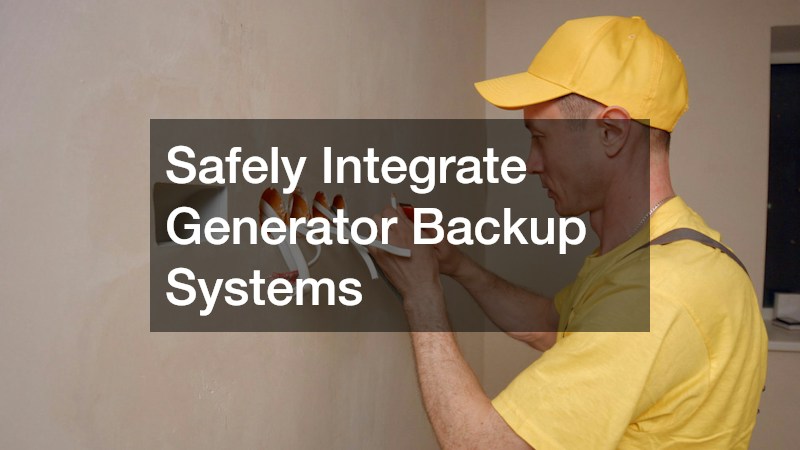
Prolonged grid outages during winter blizzards or severe hurricanes can render homes uninhabitable by disabling sump pumps, refrigeration, and heating equipment. While portable or standby generators provide vital emergency power, connecting a generator directly into a standard wall outlet creates an extremely dangerous condition known as backfeeding. Backfeeding energizes neighborhood power lines outside your property, putting utility linemen working to repair the grid at risk of fatal electrocution. Homeowners must work with a licensed local electrician to install a dedicated manual or automatic transfer switch. A transfer switch physically isolates the home’s electrical panel from the utility grid, permitting safe power distribution to essential branch circuits during an outage.
- Locate portable generators at least twenty feet away from windows, doors, and exterior vents to eliminate lethal carbon monoxide accumulation.
- Store fresh fuel in approved, tightly capped containers and treat it with fuel stabilizer to prevent carburetor gumming during storage.
- Use heavy-duty, outdoor-rated, continuous extension cords of appropriate wire gauge to power appliances without cord overheating.
- Start and run your backup generator under a light electrical load for fifteen minutes every month to verify operational readiness.
While property owners cannot influence the path or intensity of severe weather systems, the physical resilience of a home is directly within their control. Investing in structural reinforcements, proactive moisture barriers, durable mechanical systems, and safeguarded electrical equipment provides lasting protection against destructive weather. Proactive repairs dramatically reduce the risk of structural collapse, ruinous indoor flooding, and costly emergency service calls when disasters strike.
Rather than waiting for emergency sirens to sound, begin auditing your home’s vulnerabilities today. Addressing accessible maintenance tasks now and partnering with licensed trade specialists for specialized installations builds a durable, resilient property. By systematically reinforcing every critical system before severe weather arrives, you ensure that your home remains a safe, dependable haven capable of weathering the storm.