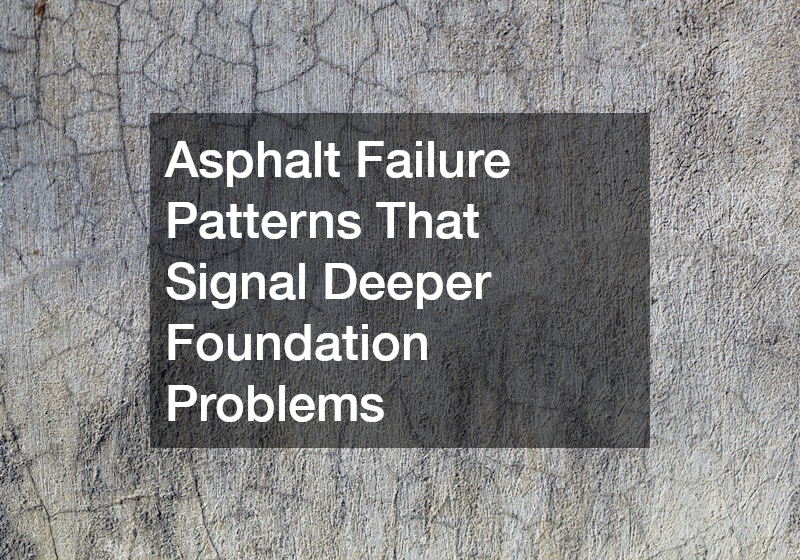
A cracked driveway looks like a paving problem, but sometimes it’s a message from the ground beneath your feet. Asphalt is flexible enough to hide small shifts in soil for a while, which means visible damage often shows up only after a foundation issue has been developing for months or years. Learning to read these warning signs early can save you from a much larger repair bill down the road. This guide walks through the most telling asphalt failure patterns and what they usually mean for your property.
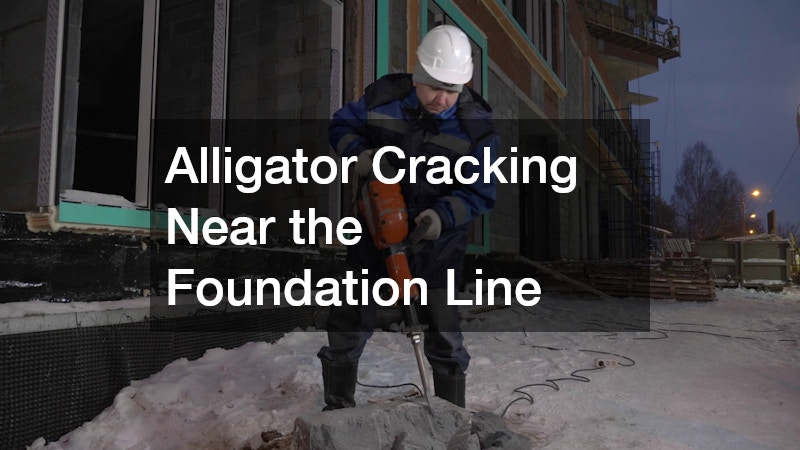
Alligator Cracking Near the Foundation Line
Alligator cracking gets its name from the interlocking, scaly pattern that spreads across the surface, resembling reptile skin. This pattern usually points to a failure happening below the visible layer, not just wear on top. The asphalt itself may still be structurally sound; the real problem lies in what’s underneath it. When this pattern shows up specifically along the perimeter of your home or garage, it often means the soil supporting both the slab and the foundation is losing its ability to bear weight evenly. Clay-heavy soils that expand when wet and shrink when dry are frequent culprits, especially in regions with seasonal moisture swings. Poor drainage, leaking gutters, or a missing downspout extension can concentrate water in one spot, softening the base right where the pavement meets the structure. This is different from ordinary wear that happens in the middle of a long driveway run, which usually results from traffic load or an aging asphalt mix. Cracking near the foundation line tends to follow the building’s edge in a fairly consistent band, often within one to three feet of the wall. If you notice the cracks widening after heavy rain or deepening year over year rather than staying stable, that’s a strong sign the settlement is ongoing rather than a one-time event.
Alligator cracking gets its name from the interlocking pattern of cracks that resembles reptile skin, and it typically signals that a pavement layer has lost its structural integrity. When this pattern shows up near foundation walls rather than in the middle of a driveway, it deserves extra attention. The location matters here almost as much as the pattern itself, since soil movement near a foundation behaves differently than soil under an open stretch of asphalt. Before simply patching the surface, it’s worth having the area assessed. A qualified asphalt company can inspect the depth and spread of the cracking, check for signs of standing water or poor drainage nearby, and determine whether the base beneath the pavement has shifted or washed out. That inspection also helps answer a more important question: is this cracking isolated to the pavement base, or is it connected to a larger settling issue affecting the foundation itself? Warning signs worth mentioning to the inspector include gaps wider than a quarter inch, cracking that has appeared or worsened within the past few months, and any pooling water within a few feet of the foundation line. If the damage turns out to be more than surface-level, a structural engineer’s opinion should come before any repaving work begins. Patching over cracking that stems from foundation movement only delays a more expensive repair and can mask a problem that keeps getting worse underground.
- Look for cracks arranged in a tight, web-like grid (roughly 1-4 inch segments) rather than a single line
- Check whether the pattern is worse near the house than in open areas, which points to localized soil or drainage issues rather than general pavement aging
- Note if the cracking appeared suddenly after heavy rain or a dry spell, since rapid soil moisture shifts can trigger foundation movement
- Watch for accompanying cracks in nearby stucco or masonry walls, especially diagonal cracks near windows and doors
- Measure crack width if possible; gaps wider than 1/4 inch often indicate active settling rather than surface wear
- Check if the cracking follows the foundation’s perimeter or clusters near downspouts, which suggests water is undermining the soil beneath both structures
Longitudinal Cracks Running Parallel to the House
Long, straight cracks that run parallel to your home’s foundation wall are a different animal than random surface cracking. These often form when the soil directly under the edge of the driveway pulls away from or settles differently than the soil under the house itself. Over time, this differential movement stretches the asphalt until it splits in a fairly straight, consistent line.
This pattern is especially common in homes built on expansive clay soils, which swell when wet and shrink when dry. Because the movement is directional, the crack tends to widen at one end and stay tighter at the other, which is a useful clue when you’re trying to describe the problem to someone assessing the site.
- Measure the crack width at both ends to see if it’s uneven
- Check if the crack lines up with a downspout or drainage path
- Track whether the gap changes size between seasons
Depressions and Birdbath Spots Along the Driveway Edge
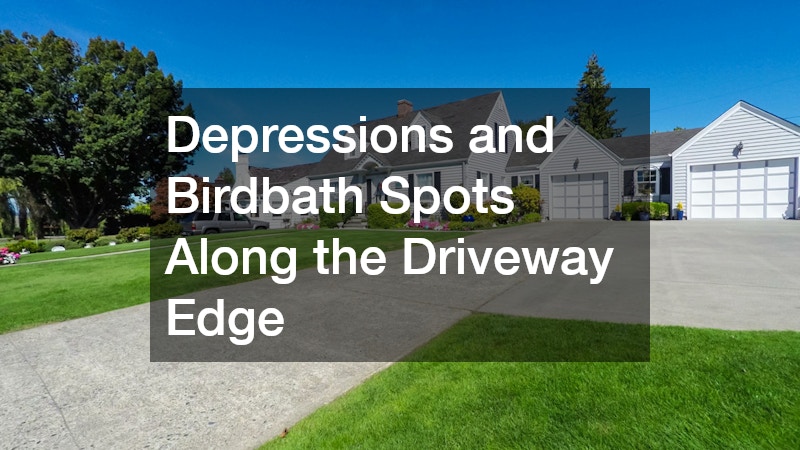
A birdbath is the informal term for a shallow depression in asphalt that collects standing water after rain. When these dips form consistently along the edge closest to the house, rather than scattered randomly across the whole surface, they often indicate that the base material near the foundation has settled or washed out. Water pooling in the same spot repeatedly will accelerate the damage, since standing moisture softens the base even further.
These depressions are worth taking seriously because they can be an early clue that soil erosion is occurring underground, possibly from a broken drain line or poor grading. An excavating contractor can dig a small test area to check what’s happening beneath the surface without disturbing the whole driveway, giving you real information instead of guesswork.
- Mark depressions after a rainstorm when they’re easiest to see
- Note the depth of standing water with a ruler for reference
- Check whether depressions grow larger after freeze-thaw cycles
Heaving and Upward Buckling of the Pavement Surface
While most settlement issues cause asphalt to sink, some foundation problems push pavement upward instead. This heaving is often caused by expansive soil swelling with moisture, tree roots growing beneath the slab, or frost action in colder climates. In each case, something beneath the surface is gaining volume and has nowhere to go but up. Expansive clay soils are a common culprit, especially in regions with heavy clay content that can absorb significant water and swell noticeably during wet seasons, then shrink back down when conditions dry out. This cycle of swelling and shrinking, repeated over years, gradually distorts the pavement above it. Tree roots create a more localized version of the same problem, lifting asphalt directly over root systems as they grow and thicken beneath the slab.
In colder climates, frost heave is a major driver of upward buckling. Water in the soil freezes and expands, sometimes lifting pavement by an inch or more during winter months, then settling again as the ground thaws in spring. Repeated freeze-thaw cycles can leave the affected area progressively more uneven each year. Unlike a pothole, heaved asphalt tends to form a broad, rounded bump rather than a sharp edge. These bumps can span several feet across and often appear gradually, making them easy to dismiss until they become a tripping hazard or start causing water to pool in the low areas around them.
Heaving and upward buckling create a different diagnostic puzzle than cracking or potholes, because the pavement is being pushed up rather than worn down. This usually points to something happening underneath the surface — expansive clay soils absorbing moisture and swelling, frost heave in colder climates, or tree roots growing beneath the pavement edge. The location and shape of the bump often tell experienced eyes which of these is at play. When heaving happens close to a foundation wall, it can be a sign that the same upward pressure is affecting the structure itself, not just the driveway. A localized, rounded bump a few feet from the house often traces back to a single root system, while a broader, linear ridge running parallel to the foundation suggests soil movement across a wider area. That distinction matters, because one is a landscaping fix and the other could mean the ground supporting your home is unstable.
Asphalt contractors who specialize in diagnosing base failures can often tell from the shape and location of the bump whether it’s a localized root issue or something tied to broader soil movement around the home. They’ll typically probe the affected area, check for nearby drainage issues or downspouts dumping water against the foundation, and look at seasonal patterns — heaving that appears every winter and settles every summer is a strong signal of frost or moisture-driven soil expansion rather than a one-time root problem. If the buckling lines up with visible cracks in the foundation, sloping floors, or doors that stick, it’s worth bringing in a foundation specialist alongside the paving crew. Catching this overlap early can mean the difference between a simple driveway patch and a much costlier structural repair down the line.
- Lay a 4-6 foot straight board or level across the bump and measure the gap underneath with a tape measure or ruler; anything over 1-2 inches typically signals significant subsurface movement
- Check for nearby tree roots visible at the surface, and look 10-15 feet in either direction since roots often travel farther than the canopy suggests
- Note whether the bump appears seasonally or has been permanent for years
- Track seasonal timing specifically — bumps that swell in winter or after heavy rain and flatten in dry months often point to frost heave or expansive clay soil rather than root intrusion
- Inspect the edges of the buckle for cracking or crumbling asphalt, which indicates the surface is under active stress rather than simply resting on a raised but stable base
- Mark the bump’s location and dimensions with chalk or spray paint, then photograph it monthly to build a record of whether it’s growing, shrinking, or staying constant over time
Cracking Patterns That Match Interior Foundation Damage
One of the clearest signals that asphalt failure is tied to a real foundation problem is when the cracking outside lines up with cracking or shifting inside the home. Doors that stick, windows that no longer close evenly, and diagonal cracks in drywall near corners often appear at the same time as exterior pavement cracking on that same side of the house. This kind of matching pattern is rarely a coincidence.
Exterior finishes can show the same story. A stucco company called out for hairline cracking on an exterior wall may notice the cracks trace a diagonal path from a window corner down toward the ground, right where the driveway also shows stress. When indoor and outdoor signs point to the same corner of the house, it strengthens the case for a deeper structural evaluation rather than a simple resurfacing job.
- Walk the interior perimeter and note any doors or windows that stick
- Check drywall corners for diagonal cracking patterns
- Compare the location of interior issues to exterior pavement damage
Pothole Clusters That Return After Repair
A single pothole is usually just wear and tear, but a cluster of potholes that keeps reappearing in the same general area, even after patching, suggests something more persistent is going on underneath. This pattern often means water is infiltrating the base layer from a source that hasn’t been addressed, such as a cracked pipe, poor drainage grading, or a collapsing sub-base.
Repeated patching without solving the underlying cause is a common and frustrating cycle for homeowners. Before paying for another round of surface repairs, it makes sense to ask an asphalt paving contractor to inspect what’s below the damaged area, since a proper fix may require rebuilding the base rather than just filling the hole again.
- Keep a simple log of repair dates and locations to spot repeat patterns
- Check for soft, spongy spots around the edges of old patches
- Look for water stains or erosion channels near the repeated potholes
Slab Separation Where Driveway Meets Garage Floor
The seam where a driveway meets a garage slab is a common trouble spot, and separation here can reveal a lot about what’s happening with the foundation. A small, even gap is normal and expected, since driveways and garage slabs are built as separate pours. A widening or uneven gap, however, especially one that tilts or drops on one side, often points to differential settling between the two structures.
This is an area where concrete contractors and asphalt specialists often need to coordinate, since the garage slab and the driveway may require different repair approaches even though they meet at the same seam. Getting both perspectives helps ensure the fix addresses the actual cause rather than just the visible gap.
- Check whether the gap is level or noticeably angled
- Measure the seam width at multiple points along its length
- Note if water pools at the seam after rainfall
Edge Crumbling and Loss of Shoulder Support
Asphalt edges that crumble, sink, or lose their crisp line are often blamed on age or heavy vehicle traffic, but this pattern can also mean the shoulder soil supporting the pavement edge has weakened. Without solid support along the sides, the edges lose structural backing and start to break down even if the center of the driveway looks fine. This is especially common on properties where grading slopes toward the house rather than away from it.
If edge crumbling is widespread and paired with soft, muddy shoulder soil, it may be worth consulting excavation companies to evaluate the grading and drainage around the entire property. Correcting the slope and compacting the soil properly often prevents the same edge failure from happening again after a repair.
- Press down gently on the shoulder soil to check for sponginess
- Check whether grading slopes toward or away from the foundation
- Look for erosion channels running along the driveway edge
Surface Weathering and Its Connection to Deeper Movement
Not every crack is a red flag on its own. General surface weathering, including fading, minor spider cracking, and a rough texture, is a normal part of asphalt aging and usually has nothing to do with the foundation. Routine asphalt seal coating every few years helps slow this natural wear by protecting the surface from sun exposure and moisture penetration.
The distinction matters because seal coating can mask minor surface cracks while doing nothing for cracks caused by ground movement, which will simply reappear through the new coating. If a section keeps breaking through a fresh seal coat within a season or two, that’s a signal the problem is structural rather than cosmetic, and it deserves a closer look rather than another coat.
- Note how long a seal coat typically lasts on other parts of your property
- Check if new cracks emerge in the same spot shortly after resealing
- Compare crack behavior in sealed versus unsealed sections
When to Call in a Professional for a Full Assessment
Many homeowners try to handle driveway damage with DIY patching, and for small, cosmetic issues that’s often reasonable. A hairline crack, a small pothole, or minor surface flaking usually won’t need more than a bag of cold patch and an afternoon of work. But once you notice several of the patterns described above happening together, especially near the foundation, it’s time to bring in someone with the right expertise. Warning signs worth taking seriously include cracks wider than a quarter-inch, sections of asphalt that have dropped an inch or more, gaps forming between the driveway and the garage slab, or damage that keeps reappearing in the same spot after repairs. If you can wiggle a screwdriver into a crack more than an inch or two deep, that’s usually a sign the problem runs deeper than the surface. A local concrete service can evaluate whether slab settling is involved, checking for voids beneath the surface, soil erosion, or drainage issues that are accelerating the damage. In many cases, they’ll use tools like a probe rod or even ground-penetrating radar to see what’s happening beneath the pavement without excavating. A broader inspection, ideally from a structural engineer or foundation specialist, can rule out or confirm foundation movement. This matters because asphalt cracking near a home is sometimes just a symptom of a much costlier problem, and catching it early can save thousands in repair costs down the line.
Getting a second opinion isn’t overkill when the stakes include your home’s structural integrity. Many companies that install driveway pavers or handle asphalt resurfacing are used to spotting the difference between routine wear and deeper trouble, and a short site visit can save you from investing in repairs that won’t hold.
- Watch for warning signs like alligator cracking, sinking edges, or repeated potholes in the same spot — these often point to base failure, not just worn asphalt
- Ask any contractor you hire whether they inspect for base and soil issues, not just surface damage
- Confirm they use core samples, ground-penetrating radar, or probing rods to check subsurface conditions rather than a visual walk-through alone
- Request photos or notes from the inspection for your own records
- Ask for a written report that separates surface repairs from base or drainage repairs, so you know what you’re really paying for
- Get a second opinion if the diagnosis feels rushed or unclear
- Be wary of any assessment that takes less than 20-30 minutes for a driveway or lot of significant size
- Compare at least two estimates if a contractor recommends full replacement, since base repairs are costly and diagnoses can vary
Asphalt cracks and dips are easy to dismiss as cosmetic, but the patterns matter more than the damage itself. Paying attention to where cracks form, how they line up with your home, and whether repairs keep failing in the same spots can tell you whether you’re dealing with a simple resurfacing job or a foundation issue that needs attention first. If you’re noticing more than one of these warning signs, don’t wait for the damage to spread further. A proper inspection now is far less costly than structural repairs later.