
Owning a home means constant upkeep, and it is easy to feel like every squeak, leak, or stain requires a service call. The truth is that many routine maintenance tasks are well within reach of an everyday homeowner with the right knowledge and a few basic tools. Learning which systems you can safely handle yourself not only saves money but also builds confidence in caring for your property. This guide breaks down the home systems that are genuinely safe for DIY maintenance, along with the ones where professional expertise still matters.
Everyday Cleaning Tasks That Keep Your Home Healthy
Regular cleaning is one of the simplest and safest maintenance tasks any homeowner can take on without hesitation. Wiping down surfaces, vacuuming vents, and cleaning behind appliances prevents dust buildup that can affect air quality and even strain your HVAC system over time. Most of this work requires nothing more than basic supplies and a consistent schedule rather than specialized skills.
That said, there are moments when hiring a professional home cleaning company makes sense, such as after a renovation project or before a big move when deep cleaning is needed quickly. For weekly or monthly upkeep, though, homeowners can easily manage the workload themselves. Building a simple rotation helps ensure nothing gets neglected.
- Dust ceiling fans and vents monthly to reduce airborne particles
- Clean refrigerator coils twice a year to improve efficiency
- Wash windows seasonally to catch early signs of seal damage
- Vacuum under furniture to prevent pest attraction
- Wipe down bathroom exhaust fans to prevent dust clogging
Basic Yard Upkeep and Boundary Maintenance
Maintaining your yard is one of the most rewarding tasks homeowners can do themselves, since it directly impacts curb appeal and property value. Mowing, trimming, and seasonal planting are straightforward tasks that do not require specialized training, just consistency and the right tools. A basic setup—a mower, string trimmer, pruning shears, and a rake—covers most weekly needs without a major investment.
Timing matters as much as effort. Mowing grass to about 2.5 to 3 inches helps roots stay healthy and resist drought, while trimming hedges and shrubs in early spring or late fall encourages stronger growth. Seasonal planting, such as bulbs in fall or annuals in spring, keeps the yard looking fresh with minimal upkeep.
Many homeowners find that a little research into local soil and climate conditions goes a long way toward keeping a yard healthy. A simple soil pH test, available at most hardware stores, can reveal whether you need lime or fertilizer before planting. Boundary maintenance, like keeping fence lines clear and edging along walkways, also protects your property lines and prevents disputes with neighbors.
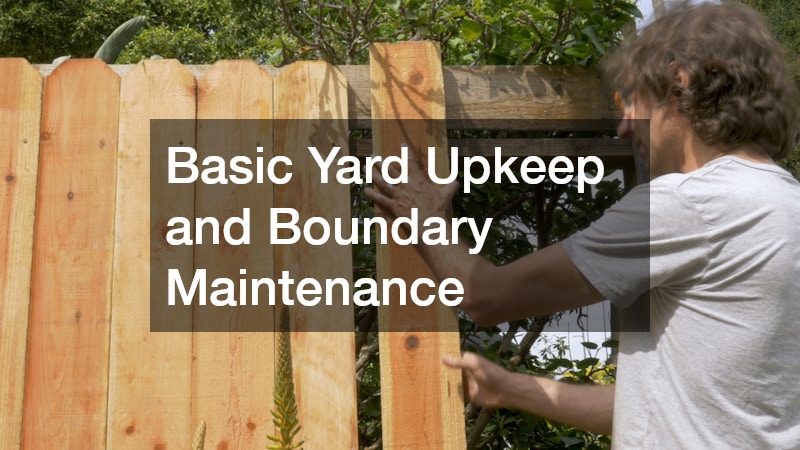
When it comes to more structural yard projects, such as fence installation, the line between DIY and professional work becomes clearer. Small repairs like tightening loose posts, resetting a leaning section, or replacing a broken picket are manageable weekend tasks that usually require nothing more than a level, a drill, and some galvanized screws. Installing an entire new fence line is a different matter, since it often demands precise measurements, knowledge of local setback rules, and in many municipalities, a permit before the first post hole is dug.
Property line disputes are another reason to pause before tackling a full fence project yourself. A survey confirming exact boundaries can prevent costly disagreements with neighbors down the road, and it’s worth checking whether your homeowners association has its own height or material restrictions. These are details a licensed installer will already know how to navigate.
Basic lawn care, such as mowing, edging, seeding bare patches, or applying fertilizer a few times a season, is well within the average homeowner’s ability. Larger projects like regrading a sloped yard, designing an irrigation system, or building a stone patio or retaining wall involve engineering considerations most DIYers aren’t equipped to judge. Poor grading, for instance, can send water pooling toward your foundation instead of away from it, leading to expensive repairs later.
This is where landscaping contractors earn their fee. They understand how soil composition, drainage patterns, and plant selection interact over time, and they can design hardscaping that holds up through freeze-thaw cycles rather than cracking after a single winter. For anything involving heavy equipment, load-bearing walls, or altered water flow, hiring a professional is the safer long-term investment.
- Mow at the correct height for your grass type—about 2.5-3 inches for cool-season grasses like fescue, and 1-2 inches for warm-season varieties like Bermuda—to prevent stress and browning
- Trim fence posts and replace loose or splintered boards as needed, checking for rot at the base where wood meets soil
- Water plants early in the day, ideally between 6-10 a.m., to reduce evaporation loss and help prevent fungal growth from overnight moisture
- Apply mulch seasonally in a 2-3 inch layer to retain soil moisture, keeping it a few inches away from tree trunks and stems to avoid rot
- Inspect gate hinges and latches for rust or looseness, tightening screws and applying lubricant like WD-40 twice a year
- Edge along walkways and garden beds every few weeks to keep boundaries crisp and prevent grass from creeping into planting areas
- Check fence lines after storms for leaning posts or shifted panels, since wind and saturated soil can loosen anchoring over time
Garage Door Care You Can Handle at Home
Garage doors see daily use, and much of their upkeep is well within a homeowner’s ability. Lubricating hinges, tracks, and rollers every few months keeps the door operating smoothly and quietly. Visual inspections for rust, loose bolts, or worn weather stripping can catch small issues before they become bigger headaches.
However, once a garage door starts showing signs of spring tension issues or the opener begins malfunctioning, it is time to call in garage door repair specialists rather than attempting a fix yourself. Torsion springs, in particular, carry a lot of stored energy and can cause serious injury if mishandled. Knowing when to stop DIY efforts and call for help is just as important as knowing what you can safely do.
- Lubricate rollers and hinges every three to six months
- Check weather stripping for cracks or gaps
- Test the auto-reverse safety feature regularly
- Tighten visible hardware but avoid touching the spring assembly
- Clean tracks to remove dirt and debris buildup
Simple Electrical Checks That Are Safe to Perform
Not all electrical maintenance requires a professional visit. Homeowners can safely replace light bulbs, reset tripped breakers, and test outlets using inexpensive plug-in testers, which typically cost under $10 and instantly flag wiring problems like open grounds or reversed polarity.
Keeping an eye on flickering lights, buzzing switches, or warm outlet covers can help you catch potential issues early without needing specialized tools. If a breaker trips repeatedly after being reset, or an outlet feels hot to the touch, that’s a signal to call an electrician rather than continue testing it yourself.
That said, electrical work involving wiring, panel upgrades, or persistent breaker trips should always be left to licensed electricians. If a breaker trips once after an obvious overload, like running a space heater and microwave on the same circuit, resetting it is fine. But if it trips repeatedly within days or trips immediately after resetting, that signals a deeper wiring or load issue that needs professional diagnosis.
Attempting to fix wiring issues without proper training can lead to fire hazards or electrocution risks, since household circuits typically carry 120 to 240 volts, more than enough to cause serious injury. Warning signs that call for an electrician include warm outlet covers, a persistent burning smell, flickering lights across multiple rooms, or scorch marks near switches.
Recognizing the boundary between simple maintenance and complex repair work is critical for safety. Simple tasks like testing GFCI outlets with the built-in test button or replacing a lightbulb are safe for most homeowners. Anything requiring you to open a panel, splice wires, or work near the main service line should be handled only by a qualified electrician.
- Replace bulbs with the correct wattage and type for each fixture, and wipe down covers and shades every few months to prevent dust buildup that can cause overheating
- Test GFCI outlets monthly by pressing “test” (power should cut off) then “reset” (power should return); if it doesn’t reset, the outlet may need replacing
- Reset a tripped breaker only once by flipping it fully off then back on; if it trips again immediately, stop and call an electrician since repeated tripping signals a deeper wiring or overload issue
- Inspect extension cords for fraying, exposed wire, or cracked insulation, and never run them under rugs or through doorways where they can be pinched
- Avoid overloading outlets or power strips with multiple high-wattage devices like space heaters, microwaves, or hair dryers running at once
- Feel outlet covers and switch plates occasionally for warmth, which can indicate loose wiring behind the wall
- Keep an eye out for flickering lights or a faint burning smell, both early warning signs that warrant professional attention

Keeping Bathroom Fixtures in Good Shape
Bathrooms endure heavy daily use, but much of their upkeep is manageable without professional intervention. Cleaning grout, checking caulking around tubs, and clearing slow drains are all tasks a homeowner can handle with basic tools and some patience. Regular maintenance in this space also helps prevent mold growth, which is both a cosmetic and health concern.
When it comes to larger updates, such as full bathroom renovations, the scope of work usually calls for licensed professionals who understand plumbing codes and structural considerations. Replacing a faucet or recaulking a tub is very different from re-tiling a shower or moving plumbing lines. Knowing which side of that line your project falls on will save you time, money, and frustration.
- Recaulk around tubs and sinks every one to two years
- Clean shower heads with vinegar to remove mineral buildup
- Clear hair from drains using a simple drain snake
- Check under sinks for slow leaks monthly
- Replace worn toilet flappers to prevent water waste
Understanding Your Well Water System
For homeowners with a private well, understanding the basics of the system is essential for both safety and cost savings. Simple tasks like checking water pressure gauges, testing water quality periodically, and keeping the wellhead area clear of debris are all manageable without professional help. Homeowners who stay proactive with these small checks often catch problems early.
More technical issues, however, such as well water pump repairs, require specialized knowledge of pressure tanks, wiring, and pump mechanics. Attempting to repair a pump without the right training can lead to costly damage or even contamination of your water supply. For anything beyond basic monitoring, it is best to bring in a specialist familiar with well systems.
- Test water quality at least once a year
- Keep the area around the wellhead clear of debris
- Monitor pressure tank readings for consistency
- Note unusual sounds or pressure drops early
- Schedule professional inspections every few years

Small Remodeling Projects Within Reach
Not every remodeling job requires bringing in a full crew. Painting rooms, updating cabinet hardware, or installing new light fixtures are all projects that a motivated homeowner can complete with some planning and the right tools. These smaller updates can refresh a space significantly without a large investment.
For larger structural changes, such as reconfiguring a kitchen layout or adding square footage, working with a home remodeling company becomes necessary due to permitting, engineering, and design considerations. Attempting major renovations without this expertise can lead to costly mistakes or code violations. Knowing your limits helps you decide when a project is a weekend job versus a long-term investment.
- Repaint rooms to refresh the look without major cost
- Update cabinet hardware for a quick style change
- Install new light fixtures with basic electrical knowledge
- Add shelving or storage solutions as needed
- Reserve structural changes for licensed professionals
HVAC Maintenance You Can Do Yourself
Keeping your heating and cooling system running efficiently often comes down to simple, regular maintenance. Changing air filters every one to three months, keeping outdoor units free of debris, and ensuring vents remain unobstructed are all tasks well suited for homeowners. These small efforts can extend the lifespan of your system and improve indoor air quality.
When your system develops more complex issues, such as refrigerant leaks or compressor problems, it is time to call in professionals for ac repair rather than attempting a fix yourself. These systems involve pressurized components and electrical wiring that require specialized certification to handle safely. Staying on top of basic maintenance can actually reduce how often you need professional intervention.
- Replace air filters every one to three months
- Clear debris from outdoor condenser units
- Keep vents and registers unblocked for airflow
- Check thermostat settings and batteries regularly
- Schedule seasonal tune-ups before extreme weather hits

Roof Inspections From the Ground
While climbing onto a roof is not recommended for most homeowners, there is still plenty you can do to monitor its condition safely. Walking the perimeter of your home and looking for missing shingles, sagging areas, or debris buildup can be done with binoculars from the ground. Checking gutters for granules or unusual buildup can also give early warning signs of wear.
For larger properties or commercial buildings, working with commercial roofing contractors becomes essential once issues extend beyond surface-level wear. These professionals have the training and equipment to safely assess structural integrity and handle repairs at height. Recognizing when a problem is beyond a simple visual check helps prevent accidents and costly oversights.
- Inspect for missing or curling shingles from the ground
- Check gutters for granule buildup after storms
- Look for sagging rooflines or visible damage
- Trim overhanging branches that could cause debris buildup
- Schedule professional inspections annually or after severe weather
Taking care of your home does not always mean picking up the phone for every issue that arises. By understanding which tasks are safe to handle yourself and which require specialized expertise, you can save money while still protecting your investment. Start with the simple maintenance habits outlined here, and build the confidence to know when it is time to call in a professional for anything more complex. Your home will benefit from both your attention and the smart decisions you make about when to seek expert help.